GUIDE
Grok Bot Reads X Without API Credits Now. When You Still Need an X Data API
Grok Bot can now search, read and monitor X without X API credits. What the docs confirm, what they leave out, and five jobs that still need an X data API.
Per our own spec, 65 of 112 endpoints bill $0.0008, 24 are free, and 23 sit between $0.0016 and $0.01. Every price ships inside our published OpenAPI document as an x-cost-usd field, so any figure in this post can be checked against the contract that bills it rather than taken on trust.
On October 7, 2026 the Grok Bot account announced that Grok Bot can now search, read, and monitor X, and six days later the 0.70.2 release notes said bots can search X and read public posts and profiles without connecting an X account. For a creator or a researcher who wants answers about X in a chat, that removes the API key, the developer account and the credit meter in one move.
For a developer, the question is narrower: which jobs does this replace, and which still need an X data API? This guide answers that from dated, first-party sources only. Where the Grok Bot documentation is silent on a limit, it says so instead of guessing.
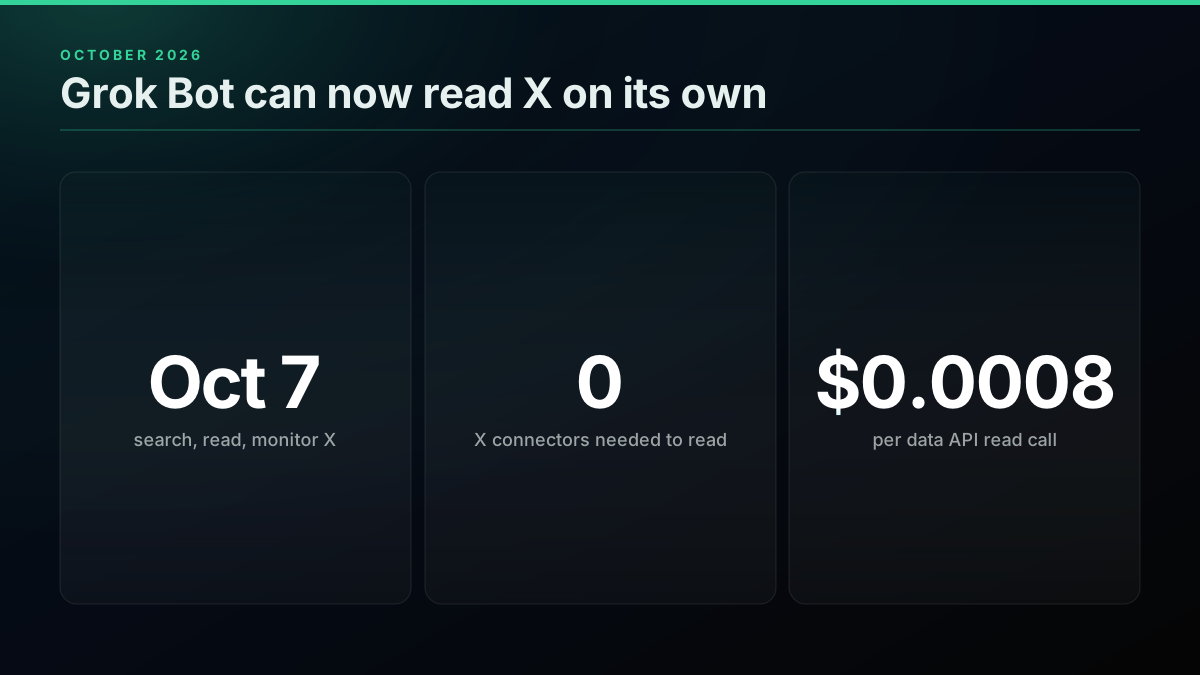
TL;DR: Since the change announced on October 7, 2026, and documented in its docs on October 12 and the 0.70.2 notes on October 13, Grok Bot reads public X without X API credits or an X account. Per those docs it can search posts, read an account's posts and mentions, see quotes and reposts, and check trends, all read-only. Its docs do not publish the cost of one X read against the weekly usage allowance, how many posts a search returns, how far back it reads, a raw JSON export or webhook delivery. So use Grok Bot when a person wants answers, and an X data API when code needs the posts: bulk and history pulls, raw JSON into your database, monitoring to your own webhooks, a known cost per call ($0.0008 standard, $0.0024 for full history) and X data inside your own product.
What changed on October 7
Grok Bot's access to X moved in three steps over six weeks, from a connector that billed X API credits, to public reads with no X account at all. The dates matter because posts written before October 7 describe a product that no longer behaves the same way.
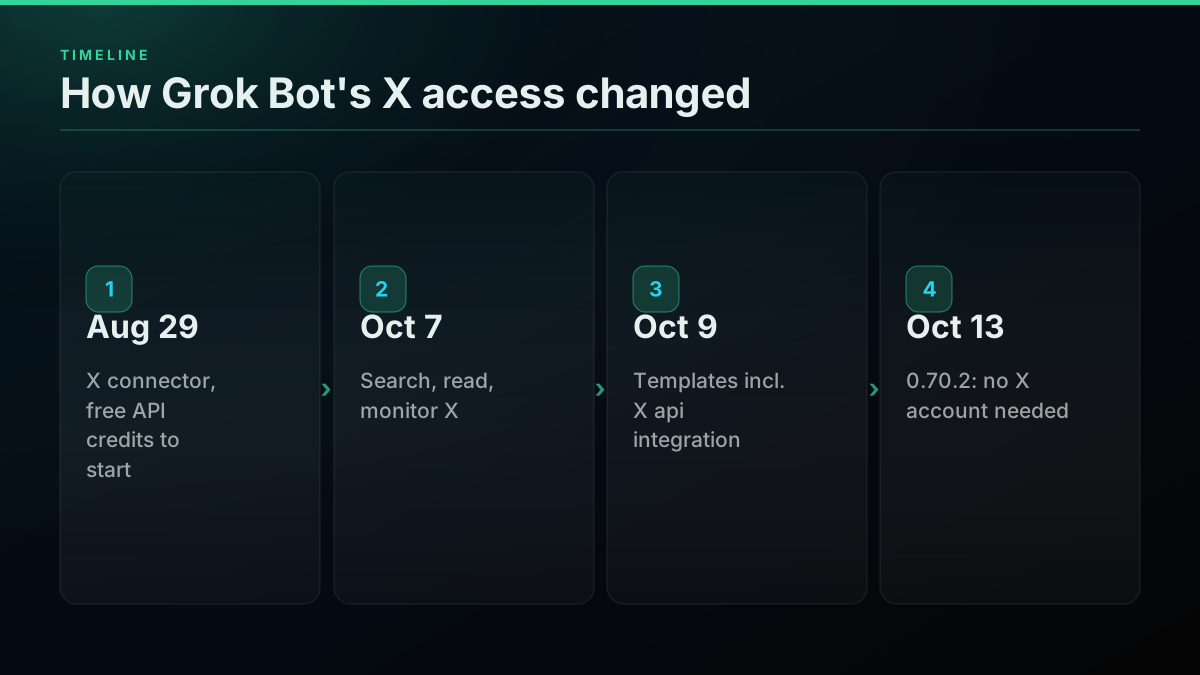
On August 29, 2026 the first X integration asked you to connect your X account, created a developer account if you lacked one, and gave paid Grok Bot users free X API credits to start. Reads in that version went through the official API. Even before the announcement, X reads from a Bot were landing on an API meter: one user in r/GrokBot reported on August 25, 2026 that a Bot routed a "what's on X" request through the X plugin and a single scan cost about 14 cents in X API credits, on a separate meter.
xAI owns Grok and X. Grok Bot still billed me X API credits for a search grok.com does for free. from r/GrokBot
Then on October 7 the Grok Bot account posted the change, and the X Developers account quoted it the same day:
Grok Bot can now search, read, and monitor X.
— @bot view on X
The same evening, X Developers relaunched the Developer Exhibit with new Grok Bot templates and a way to submit Grok Bot templates and agent skill files. On October 9 a Grok Bot builder shared four templates, one of them an "X api integration". By October 10 and October 11 users were posting that searching, reading and monitoring no longer needed the X connector, and the October 13 release made it official in the changelog.
What Grok Bot can now read on X
The Grok Bot documentation lists the X reads plainly, and it is worth reading the exact list, because it defines what a Bot can do for you today without any key, connector or developer account on your side.
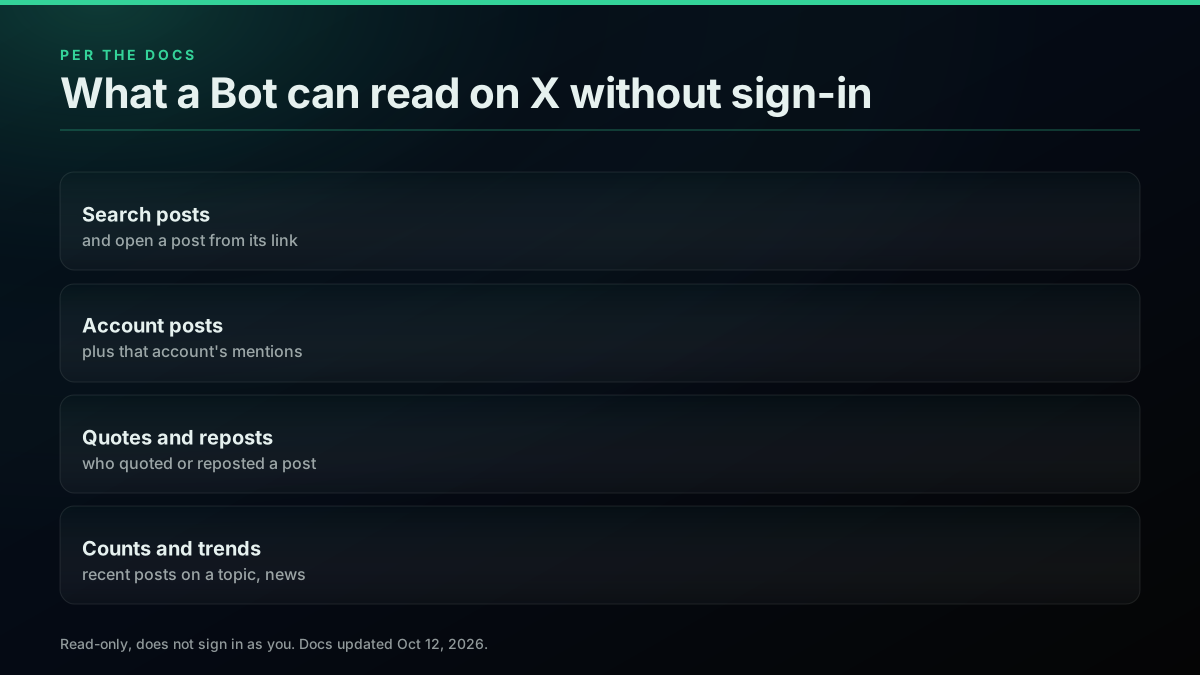
Per the Use the computer and apps page, updated October 12, 2026, a Bot can search posts, open a post from its link, read an account's posts and mentions, see who quoted or reposted a post, count recent posts on a topic, and check trends and news, all without you connecting an X account. The page adds that this access is read-only and does not sign in as you.
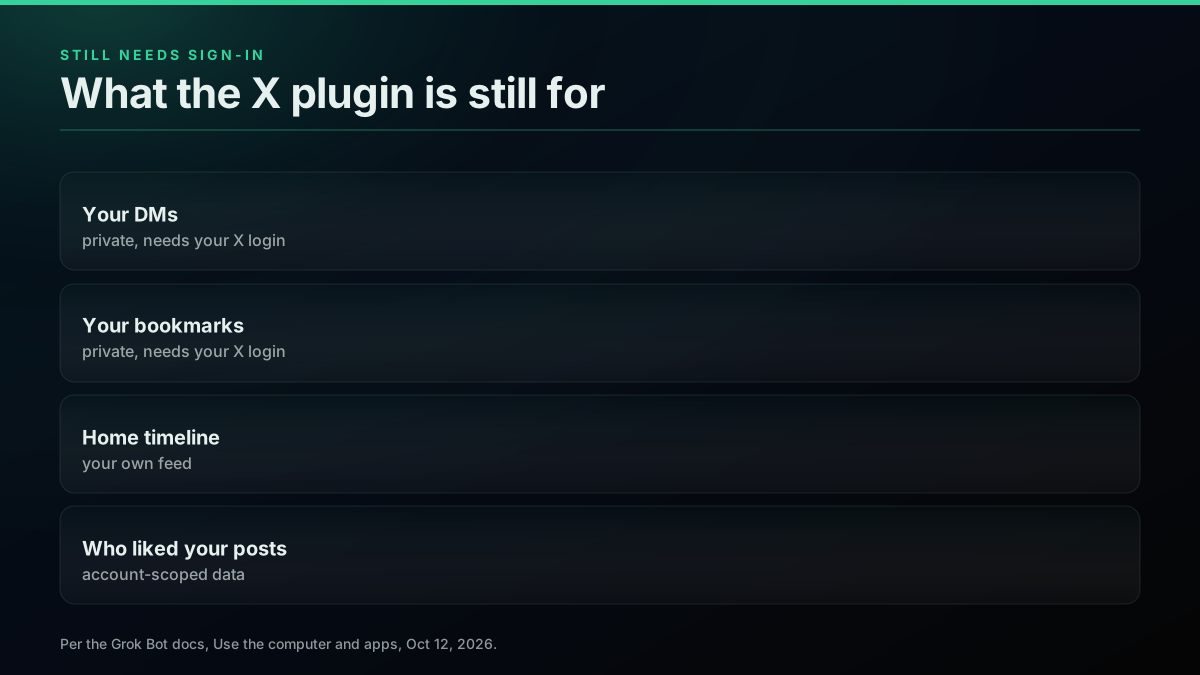
The same page draws the line at private data. Your DMs, bookmarks, home timeline and the list of who liked your posts still need the X plugin and an X sign-in. If your job touches account-scoped data, nothing changed on October 7. Our guide to using X without a developer account covers the account-scoped routes in more depth.
and gives you access to x. you can search and monitor posts through grok bot without needing x api credits.
— @kevinkern view on X
What the docs do not say
A decision guide is only as honest as its gaps, so here are the limits the Grok Bot pages leave unstated. Each row below is an absence from the published docs as of October 14, 2026, not a measured limit.
What the Grok Bot docs state about X, and what they leave out
| Question | What the docs say | Provenance | Source |
|---|---|---|---|
| Read public X without an X account? | Yes, read-only | published | published |
| DMs, bookmarks, home timeline? | Need the X plugin and sign-in | published | published |
| Routine schedule floor? | At least five minutes apart | published | published |
| Cost of one X read? | Not documented | unknown | unknown |
| Posts per search, history depth? | Not documented | unknown | unknown |
| Raw JSON or webhook delivery? | Not documented | unknown | unknown |
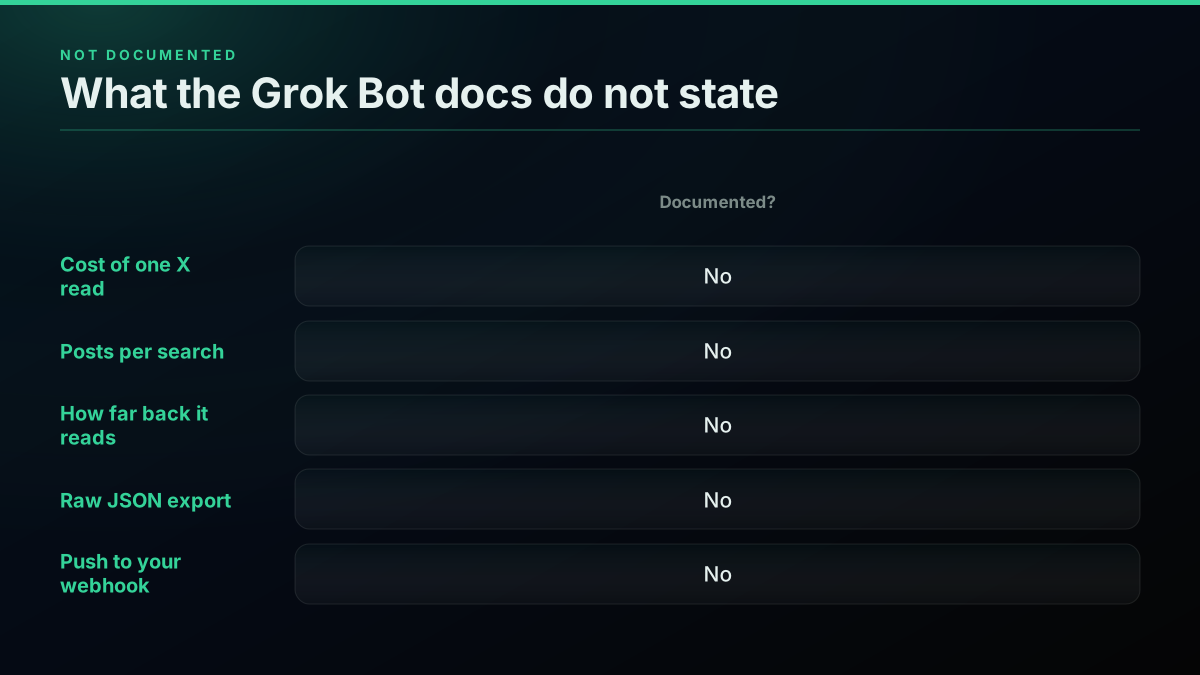
The Grok Bot subscription page, updated October 12, 2026, says Grok Bot usage draws from a weekly allowance shared with other products, and the usage limits page, updated October 11, adds that "usage rates vary by product". Neither says what one X search draws. The Skills and routines page sets clear routine rules: up to 50 routines per Bot, the 20 most recent run records kept, and schedules at least five minutes apart. It does not say how many posts one search returns or how far back a read reaches.
None of that is a criticism. A chat agent is built for a person, so a fixed schema and a per-read price are not what it optimises for. But if your plan depends on any of those numbers, you do not have them yet, and the right move is to treat them as unknown rather than to assume a generous value. The same habit applies to any data source, which is why our post on why X advanced search misses posts measures coverage instead of trusting it.
The launch week, measured
We read the launch posts back through our own API to see how far the change travelled. The numbers below are counters X reported on October 15, 2026 (UTC), one tweet detail call per post, so treat them as a dated snapshot.
The Grok Bot and X launch posts, measured through our API
| Post | Posted | Views | Likes | Source |
|---|---|---|---|---|
| @bot: search, read and monitor X | 2026-10-07 | 5,780,199 | 14,759 | measured |
| @ericzakariasson: 0.70.2 release | 2026-10-13 | 3,626,190 | 1,827 | measured |
| @ericzakariasson: four templates | 2026-10-09 | 449,074 | 1,958 | measured |
| @XDevelopers: teamed up with Grok Bot | 2026-10-07 | 30,794 | 756 | measured |
| @XDevelopers: Developer Exhibit | 2026-10-07 | 25,185 | 232 | measured |
| @ScottyBeamIO: no X connector needed | 2026-10-11 | 22,713 | 262 | measured |
Measured
Views on the Grok Bot and X launch posts, in millions
| Point | Value |
|---|---|
| @bot launch | 5.78 |
| 0.70.2 notes | 3.63 |
| Templates | 0.45 |
| X Developers | 0.03 |
| Exhibit | 0.03 |
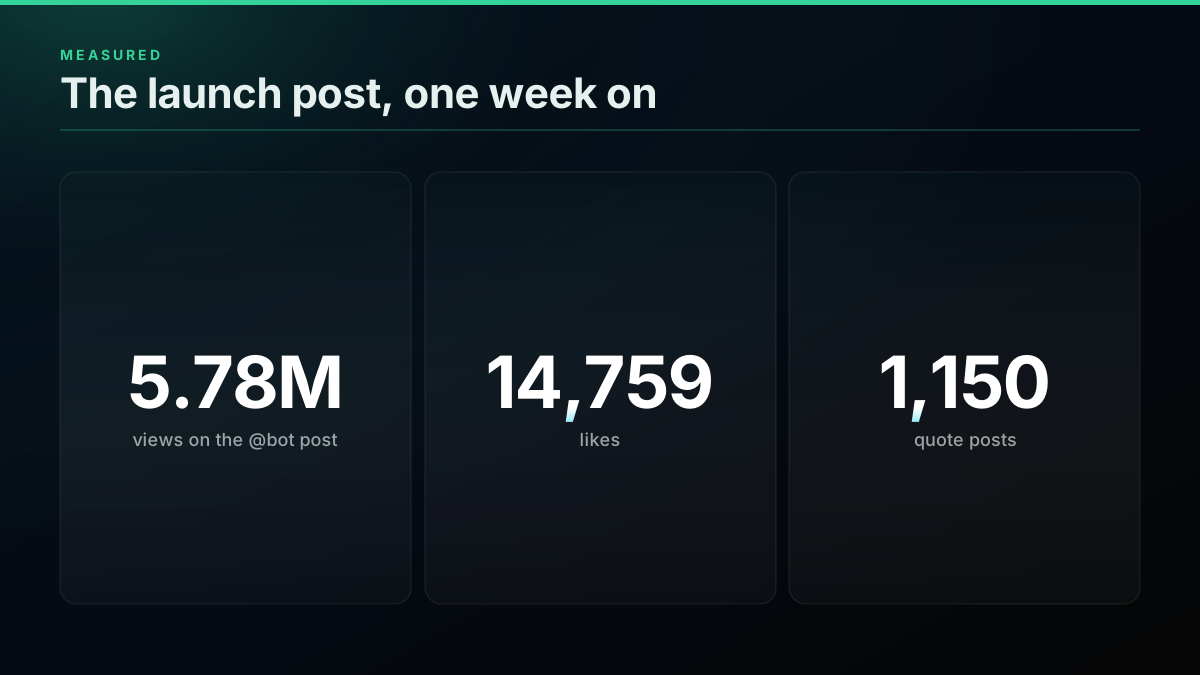
The Grok Bot account's launch post had 5,780,199 views, 14,759 likes and 1,150 quote posts a week after it went up. The 0.70.2 release post reached 3,626,190 views in under two days. Interest in reading X through an agent is clearly not a niche topic.
How much of that conversation is about APIs? The sample below pulls the newest English posts about Grok Bot and X through the TwitterAPIs search endpoint, a sample that spans roughly six and a half hours across October 14 and 15, and counts the posts that use the whole word API, credit or connector.
10% of the 100 newest English posts about Grok Bot and X mention an API, credits or the X connector.
Our data · Dataset:
grok-bot-x-posts-oct-2026· Source: public X posts, pulled through our API · Query:GET /twitter/tweet/advanced_search?query=%22grok+bot%22+%28x+OR+search+OR+monitor%29+since%3A2026-10-07+until%3A2026-10-16+lang%3Aen+-filter%3Areplies&product=Latest· Pulled: 2026-10-15 · n = 100 · Method: share of items whose text matches /(?i)\b(api|apis|credits?|connectors?)\b/i; frame: 100 unique items from 5 page(s), deduplicated by id
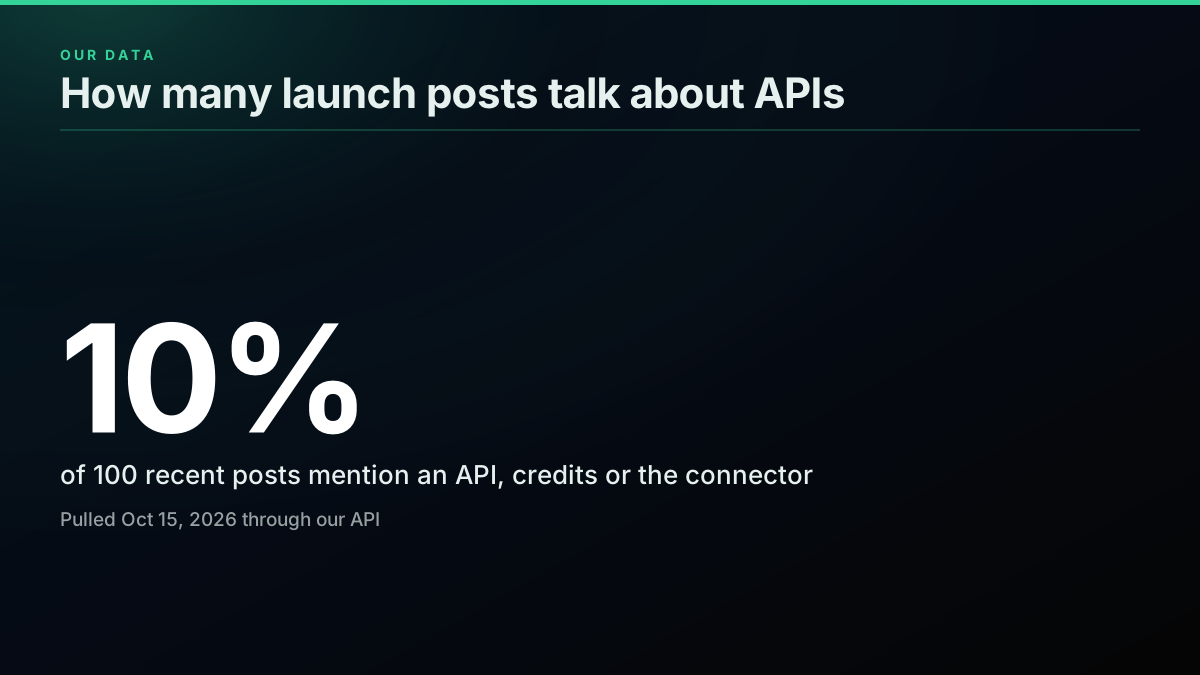
So roughly one post in ten still raises the API or credits question, and some of those are users asking about their usage allowance rather than X API billing. Most of the rest is about what Bots can do, not how they get the data, which is the right instinct for most users and the reason this guide exists for the minority who build.
Start building with TwitterAPIs
$0.0008 a call, about $0.04 per 1,000 tweets at 20 tweets a page. $0.50 free credits. No credit card required.
Where Grok Bot is the right tool
If one person wants answers about X, Grok Bot now covers the common jobs well, without a key, a developer account or a line of code, and for that person the October change is a plain improvement.
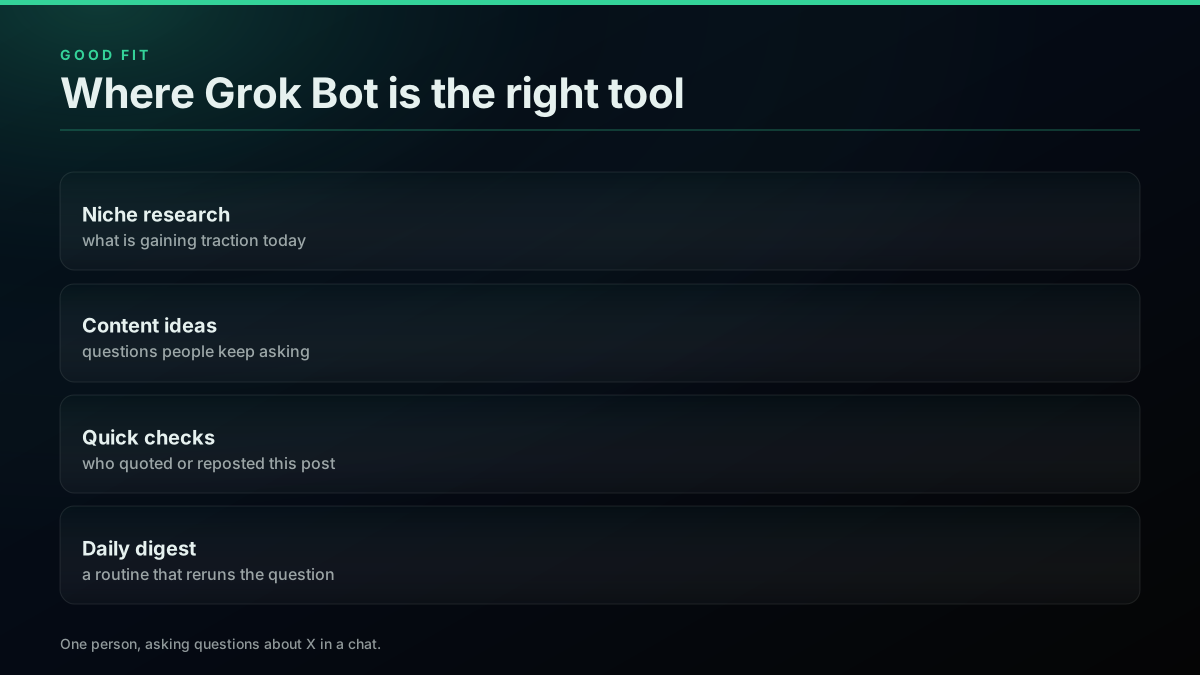
The good fits are research shaped like a question. What is gaining traction in my niche in the last 24 hours? Who quoted this post and what did they say? Which questions keep coming up about a product launch? A creator's write-up from October 11 uses exactly that pattern: give the Bot a niche, a time window and an output, and turn what it finds into content ideas. A routine can rerun the question daily, inside the five-minute schedule floor the docs set.
This walkthrough of the October 13 release shows the no-account X search in the app:
https://www.youtube.com/watch?v=8_K9yAckFh0
If that is your whole job, you may not need an API at all. Our guide to choosing a Twitter API starts from the same question: who consumes the data, a person or a program?
Five jobs that still need an X data API
The line is not about price, it is about who reads the result. When a program needs the posts themselves, these five jobs still belong on an X data API, and none of them is documented as a Grok Bot feature today.
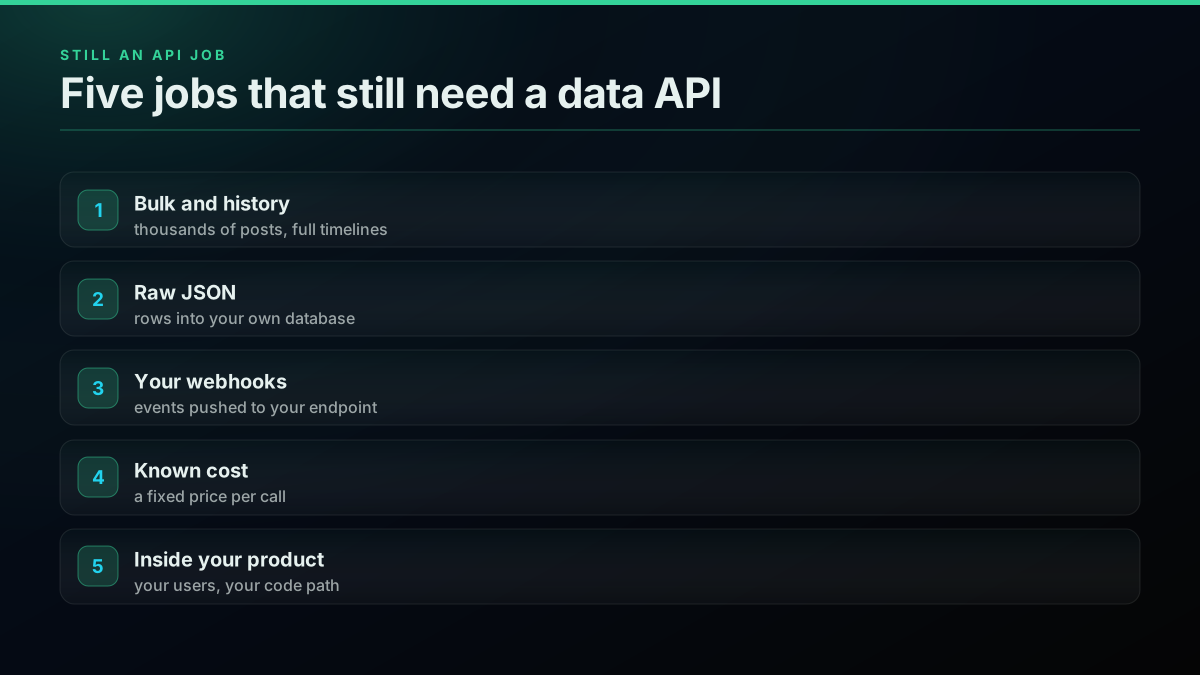
1. Bulk and historical pulls. Ten thousand posts for a dataset, or an account's timeline back to its first post, is a paging job with a known end. On a pay-per-call API a search page bills $0.0008, and a full account history read bills $0.0024 per call. Our one-million-tweet dataset breakdown prices that kind of job end to end.
# One page of search results as raw JSON: one call, $0.0008.
curl "https://api.twitterapis.com/twitter/tweet/advanced_search?query=%22grok%20bot%22%20lang%3Aen&product=Latest" \
  -H "Authorization: Bearer $TWITTERAPIS_KEY"
2. Raw JSON into your own database. A pipeline needs the same fields on every post: id, created_at, author, counts, quoted post. An API returns the same JSON shape on every call, so your schema never depends on how a chat answer was phrased.
3. Monitoring wired to your own webhooks. A watch list that has to reach your queue, CRM or alerting needs push delivery to an endpoint you own. See how to monitor mentions in real time and what poll cadence really costs.
4. Reproducible jobs at a known cost per call. Finance wants the number before the job runs. With per-call pricing, calls times rate is the bill, which you can model in the cost calculator before writing code.
SEARCH = 0.0008      # search or recent timeline, per call
HISTORY = 0.0024     # full-history read, per call

def monthly_search_cost(keywords, runs_per_day, pages_per_run=1, days=30):
    calls = keywords * runs_per_day * pages_per_run * days
    return calls, round(calls * SEARCH, 2)

print(monthly_search_cost(20, 24))   # (14400, 11.52)
5. X data inside your own product. If your users see the data, it runs through your code, your error handling and your logs. That is an integration, and per-user cost of goods is the number to watch.
import os, requests

BASE = "https://api.twitterapis.com/twitter"
KEY = os.environ["TWITTERAPIS_KEY"]

def recent_posts(username):
    """One page of an account's recent timeline: one call, $0.0008."""
    r = requests.get(f"{BASE}/user/tweets", params={"username": username},
                     headers={"Authorization": f"Bearer {KEY}"}, timeout=30)
    r.raise_for_status()
    return r.json().get("tweets", [])

posts = recent_posts("XDevelopers")
A search job that writes to your database
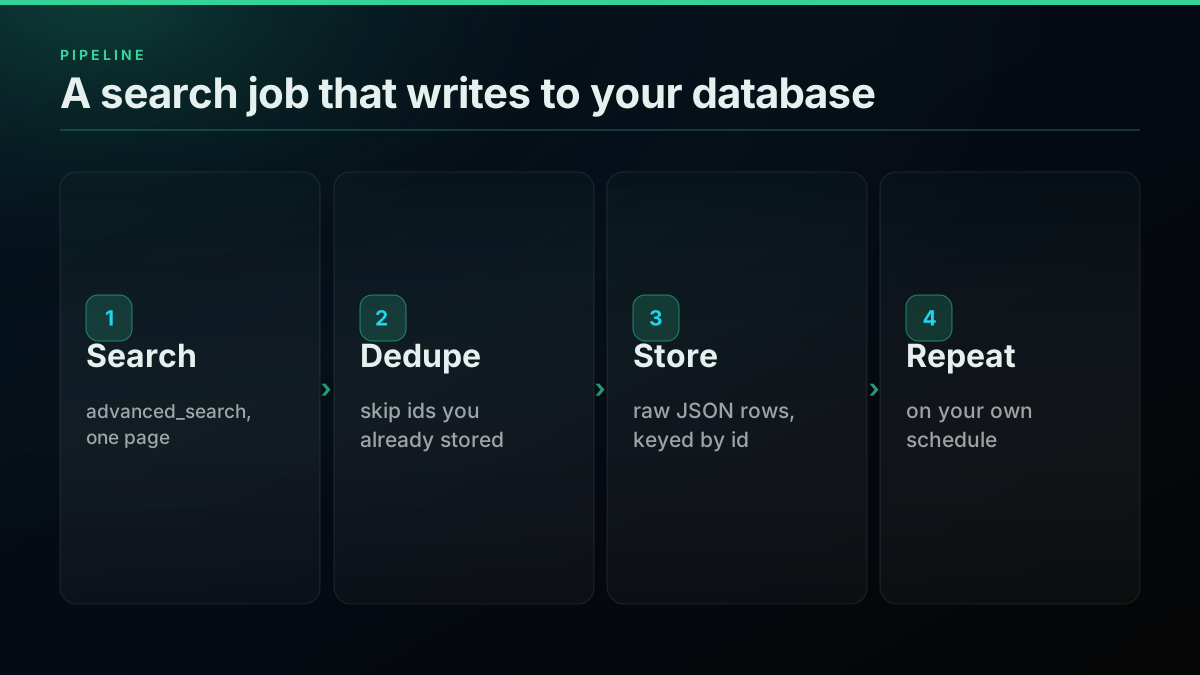
Here is what job two looks like in practice: a short Python loop that searches X, stores every new post as raw JSON in SQLite, and skips ids it has already stored, so rerunning it on a schedule never stores the same row twice. Every page call still bills, so cap the pages per run.
import json, os, sqlite3, requests

BASE = "https://api.twitterapis.com/twitter"
KEY = os.environ["TWITTERAPIS_KEY"]

db = sqlite3.connect("x_posts.db")
db.execute("CREATE TABLE IF NOT EXISTS posts (id TEXT PRIMARY KEY, created_at TEXT, raw TEXT)")

def pull(query, pages=3):
    """Search X, store every new post as raw JSON, return how many were new."""
    cursor, new = None, 0
    for _ in range(pages):
        params = {"query": query, "product": "Latest"}
        if cursor:
            params["cursor"] = cursor
        r = requests.get(f"{BASE}/tweet/advanced_search", params=params,
                         headers={"Authorization": f"Bearer {KEY}"}, timeout=30)
        r.raise_for_status()
        data = r.json()
        for t in data.get("tweets", []):
            cur = db.execute("INSERT OR IGNORE INTO posts VALUES (?, ?, ?)",
                             (t["id"], t["created_at"], json.dumps(t)))
            new += cur.rowcount
        db.commit()
        cursor = data.get("next_cursor")
        if not data.get("has_more") or not cursor:
            break
    return new

print(pull('"grok bot" lang:en -filter:replies', pages=1))
Running this script on October 15, 2026 stored 20 new posts from one page on the first run and 0 on an immediate second run, because every id was already in the table. Each page is one billed call. The pagination guide covers cursors in depth, and the advanced search operators reference lists every filter you can put in the query. Exporting the stored rows for analysis is a local step with no API calls at all:
# Turn the stored rows into JSON lines for a warehouse or a notebook.
import json, sqlite3

db = sqlite3.connect("x_posts.db")
with open("x_posts.jsonl", "w") as out:
    for (raw,) in db.execute("SELECT raw FROM posts ORDER BY CAST(id AS INTEGER)"):
        post = json.loads(raw)
        out.write(json.dumps({"id": post["id"], "text": post["text"],
                              "author": post["author"]["username"],
                              "likes": post["favorite_count"]}) + "\n")
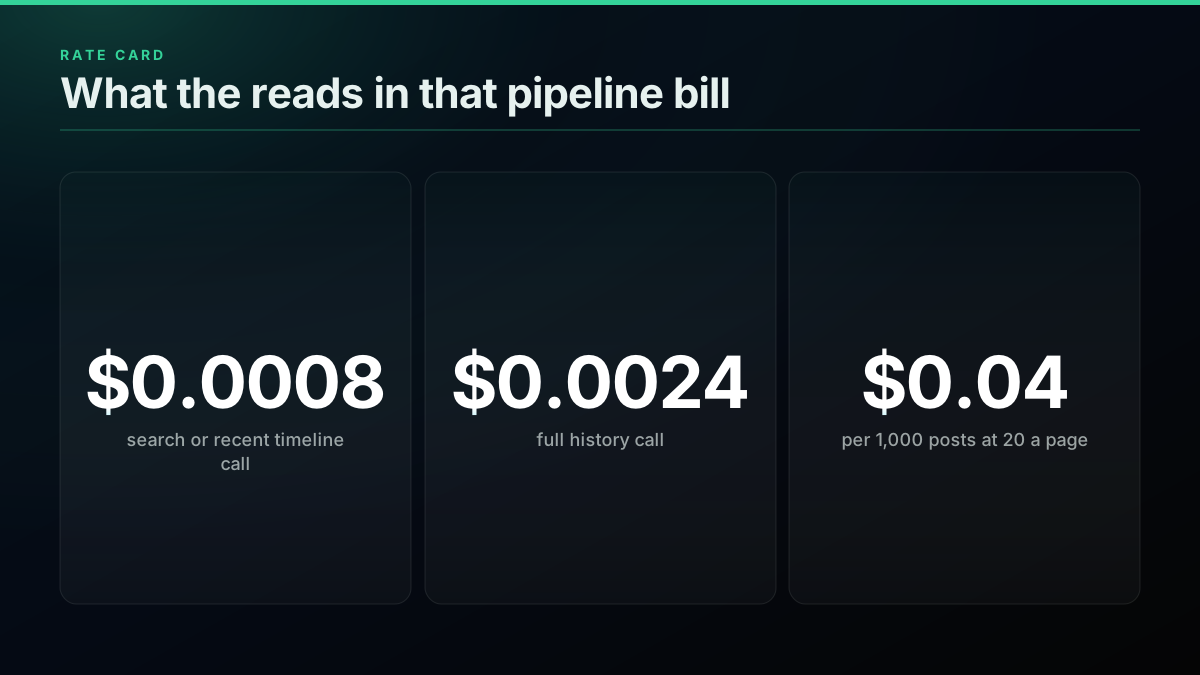
At the standard rate, 50 search pages of 20 posts is 1,000 posts for $0.04. A recent timeline read bills the same $0.0008, while the full-history read is the premium $0.0024. Those rates come from the live pricing page.
Monitoring that lands in your systems
"Monitor X" means two different things. In Grok Bot it means a routine that re-asks a question on a schedule. In a pipeline it means every matching post is pushed to an endpoint you control, the moment it is seen.
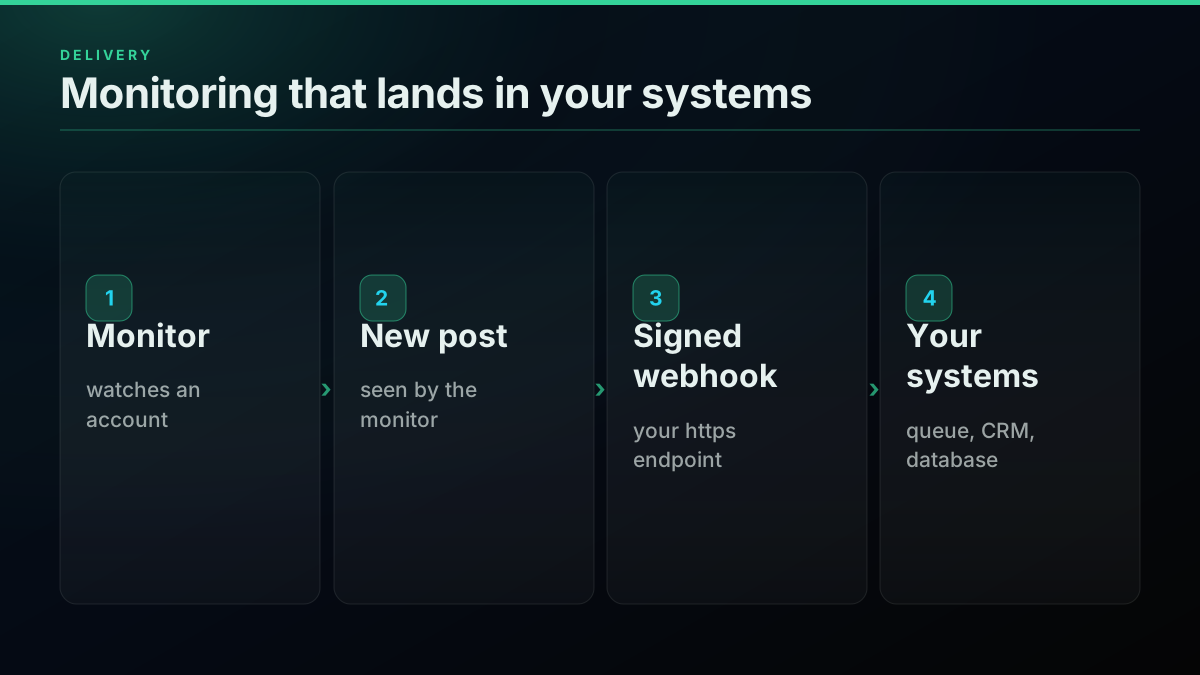
On a data API the second design is a monitor plus a signed webhook: you register an https endpoint, the monitor watches accounts, and each new post arrives as a signed HTTP delivery you verify before parsing. Creating, listing and testing monitors and webhooks carries no per-call charge, so the reads you pay for are only the ones you choose to make. Our coverage honesty post is worth reading before you rely on any monitor, ours included, and the firehose explainer covers why full real-time coverage is a different product. The receiver side is a few lines: the signature header carries a timestamp and a signature, so recompute the HMAC-SHA256 over the timestamp and the raw body, reject anything stale or mismatched, then read the post from the event.
import hmac, hashlib, time
from flask import Flask, request, abort

app = Flask(__name__)
WEBHOOK_SECRET = "whsec_..."  # returned once when the webhook is created

def verify(header, raw, tolerance=300):
    parts = dict(p.split("=", 1) for p in header.split(",") if "=" in p)
    t, v1 = parts.get("t", ""), parts.get("v1", "")
    if not t.isdigit() or abs(time.time() - int(t)) > tolerance:
        return False
    expected = hmac.new(WEBHOOK_SECRET.encode(), f"{t}.{raw}".encode(), hashlib.sha256).hexdigest()
    return hmac.compare_digest(expected, v1)

@app.post("/webhooks/twitterapis")
def receive():
    raw = request.get_data(as_text=True)
    if not verify(request.headers.get("X-TwitterAPIs-Signature", ""), raw):
        abort(401)
    event = request.get_json()
    if event.get("event") == "tweet.created":
        print("New post:", event["tweet"]["id"], "from", event["handle"])
    return {"ok": True}
The cheapest pay-as-you-go Twitter API. Try it free.
$0.0008 a call, about $0.04 per 1,000 tweets at 20 tweets a page. $0.50 free credits. No credit card required.
What a pipeline month costs, priced in advance
The point of a per-call price is that you can price the job before it exists. Here is one illustrative month for a small keyword pipeline, with every assumption stated so you can swap in your own volumes.
Worked example
One month of a keyword pipeline, priced before any code
Keywords searched hourly: 20 · 30 days of search reads: $11.52 · Search calls in 30 days: 14,400
☑ 14,400 search calls at $0.0008 come to $11.52 · ☑ Up to 288,000 posts scanned at about 20 posts a page · ☑ Every post lands as raw JSON in your own database · ☐ The same job inside a chat agent has no published per-read price
Twenty keywords searched once an hour is 480 calls a day, or 14,400 calls across 30 days, which is $11.52 at $0.0008. At about 20 posts a page that is up to 288,000 posts scanned, before deduplication. If you also need account history, a full-history read adds $0.0024 per call on top. The $0.50 signup credit covers 625 standard calls, enough to run this job for a day and check the numbers. For a wider view, the cost by workload breakdown and the per-job rate card run the same arithmetic on other jobs.
The official API is still an option for this, and it is easier to start than it was: on October 2, 2026 X Developers announced a starter offer for new pay-per-use accounts, a bonus on adding a first payment card plus a matched first auto-recharge. Our X API pricing change breakdown and the official versus third-party comparison put both routes side by side.
Grok Bot and a data API, side by side
Laid out by job rather than by feature, the two tools barely overlap. The grid uses only what each side documents, and a "not documented" cell means the Grok Bot pages are silent, not that the feature is missing.
By job
Grok Bot and an X data API, compared on what each one documents
| Grok Bot | X data API | |
|---|---|---|
| Who asks | A person, in chat | Your code |
| Public search and reads | Yes, no X account | Yes, per call |
| Output | Chat answers, files | The same JSON each call |
| Schedule | Routines, 5 min floor | Your scheduler or a monitor |
| Price per read | Not documented | $0.0008 standard |
| Full history | Not documented | $0.0024 per call |
| Delivery | Not documented | Signed webhooks |
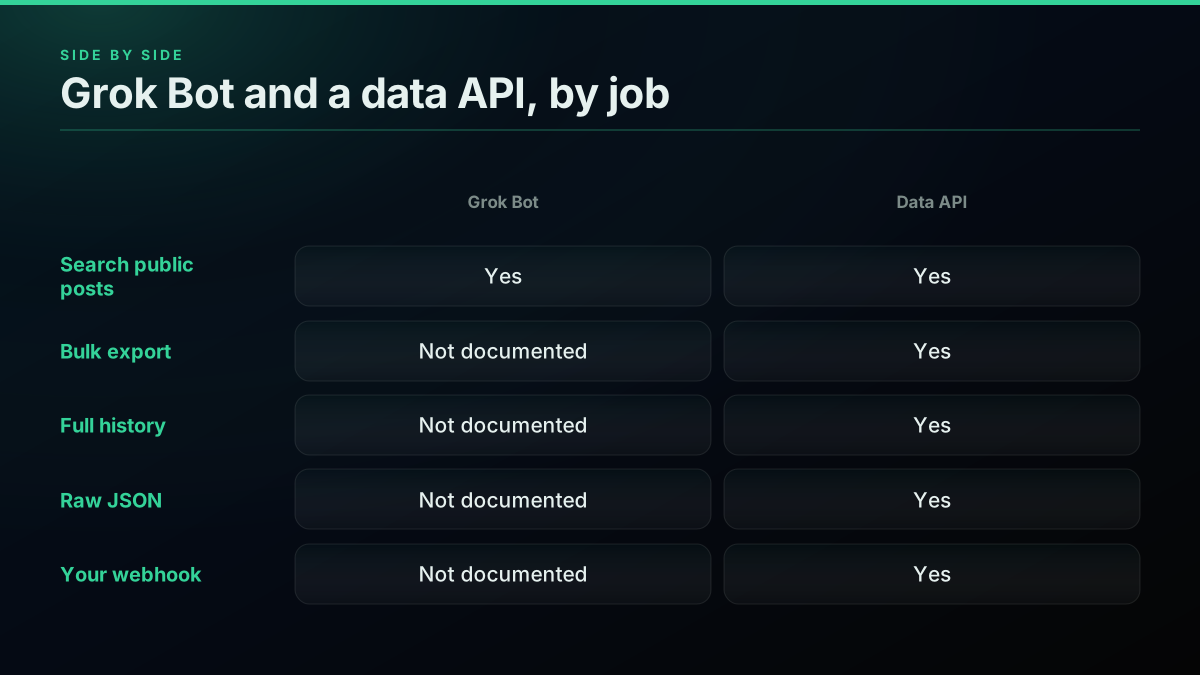
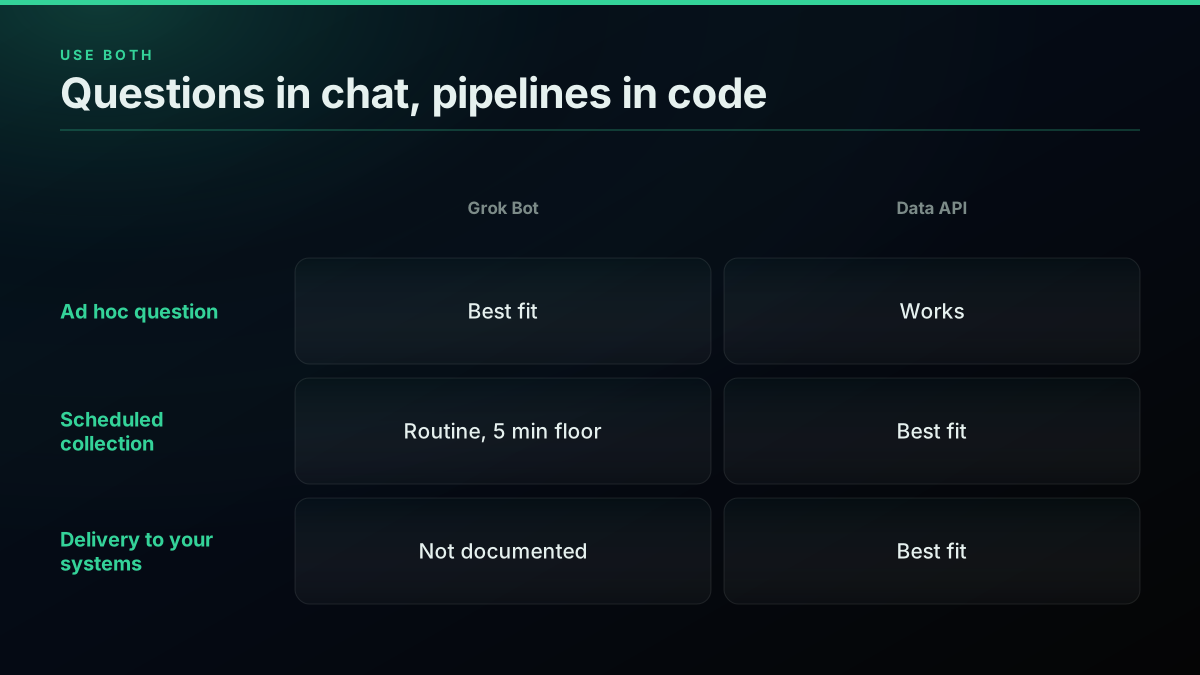
The pattern most teams will land on is to use both: ask Grok Bot the exploratory question, then move the repeatable part into code once you know what you want to keep. If your agent already runs on an MCP client, our MCP server and the Twitter MCP server guide show how to give it the same API reads with a known price per call.
grok @bot 0.70.2 is rolling out!
— @ericzakariasson view on X
Four questions that settle it
Before picking, answer four questions about the job itself. They take a minute, and they decide the tool more reliably than any feature list, because they describe who consumes the data and how.
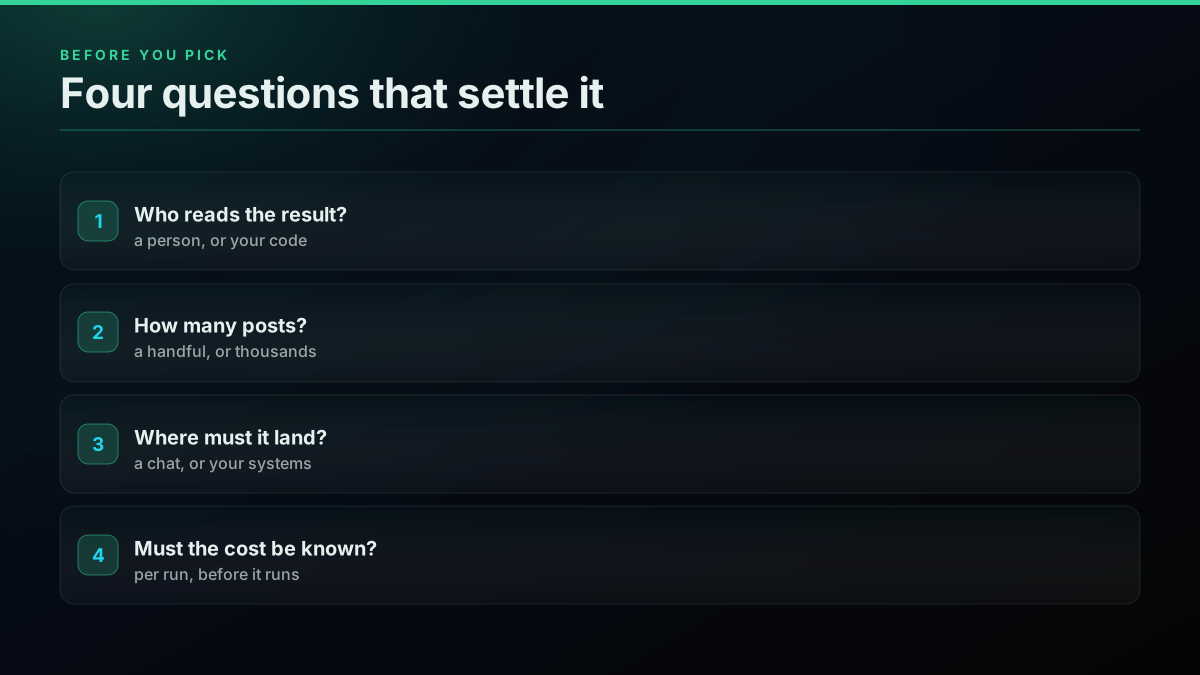
Who reads the result, a person or your code? How many posts, a handful or thousands? Where must it land, a chat or your systems? Must the cost be known per run, before it runs? Two or more answers on the code side point to an API. If the answers all sit on the person side, Grok Bot is the lighter tool, and the API alternatives comparison is there for the day that changes.
The short version
Grok Bot reading X without API credits is a real change for people who ask questions about X: announced on October 7, 2026 and documented by October 13.
It does not yet document the things a pipeline depends on: a per-read price, posts per search, history depth, raw JSON or webhook delivery. Until it does, keep questions in the agent and pipelines on an X data API, priced per call. Sign up for the $0.50 credit, run the sample above against your own query, and check the result against the pricing page before you scale it.
// sources
Where these numbers come from
Each row is a figure in this post and the artefact it was read from. Prices and limits on this platform move, so check the date on the source before you plan against it.
- Grok Bot launch post, 2026-10-07
- The first-party announcement that Grok Bot can now search, read and monitor X, the event this guide is dated from.
- Grok Bot docs: Use the computer and apps, updated 2026-10-12
- States that Bots can search and read public X without connecting an X account, read-only, and that DMs, bookmarks and the home timeline need the X plugin.
- Grok Bot docs: Skills and routines, updated 2026-10-12
- Source of the routine limits: up to 50 routines per Bot, 20 run records kept, schedules at least five minutes apart.
- Grok Bot on The X Subscription, updated 2026-10-12
- States that Grok Bot usage draws from a weekly allowance shared with other products on the plan.
- Usage limits, updated 2026-10-11
- Explains the weekly usage allowance and that usage rates vary by product, the reason the per-read cost of X access is not a published number.
- Grok Bot now works with X, 2026-08-29
- The earlier integration that asked users to connect an X account and gave paid users free X API credits to start.
- Grok Bot 0.70.2 release notes, 2026-10-13
- Release post stating bots can search X and read public posts and profiles without connecting an X account.
- X Developers on the Developer Exhibit, 2026-10-07
- The relaunch of the Developer Exhibit with Grok Bot templates and agent skill files.
- X Developers on pay-per-use credits, 2026-10-02
- The official API's current starter offer for new pay-per-use accounts, used as the dated comparison point for the official route.
Frequently Asked Questions
Not any more for public reads. The Grok Bot account announced on October 7, 2026 that it can now search, read and monitor X, and the 0.70.2 release notes from October 13 say bots can search X and read public posts and profiles without connecting an X account. Before that, the August 29 integration asked you to connect an X account and gave paid users free X API credits to start. Private data such as your DMs, bookmarks and home timeline still needs the X plugin and an X sign-in, per the Grok Bot docs updated October 12.
The Grok Bot pages we read on October 14, 2026 do not document a raw JSON export of X posts, a fixed response schema, or a way to stream results into your own database. A Bot works on a cloud computer with a shared workspace folder, so it can write files, but the format is whatever you ask it for in chat. If your job needs stable, typed fields on every post, a data API that returns the same JSON shape on every call is the safer fit.
When the result is read by code rather than a person. That covers five jobs: bulk and historical pulls, raw JSON written into your own database, monitoring that delivers to your own webhooks, jobs priced at a known cost per call, and X data used inside your own product for your own users. On a pay-per-call API a search or recent-timeline read bills $0.0008 per call, a full-history read $0.0024, and the free signup credit of $0.50 covers 625 standard calls.
It no longer draws X API credits for public reads, but it is not free of usage. Grok Bot comes with paid plans, and its docs say usage draws from a weekly allowance that resets each week, with usage rates that vary by product. The docs we read on October 14, 2026 do not publish what one X search costs against that allowance, so the honest answer is that the per-read cost is not documented. Plan for it to count toward your weekly usage.
The Grok Bot docs updated October 12, 2026 say routine schedules must be at least five minutes apart, a Bot can own up to 50 routines, and the app keeps the 20 most recent run records for each routine. They do not state how many posts a single X search inside a routine returns or how far back it reads. For a watch list that has to land in your own systems, a monitor that pushes each new post to a signed webhook is the more direct design.
Use both for what each is built for. Grok Bot is a strong fit when one person wants answers about X in a chat: what is gaining traction, who quoted a post, which questions keep coming up. A data API is the fit when a system needs the posts themselves: thousands of rows, a fixed schema, a schedule you control and a cost you can price before the job runs. Many teams will ask Grok Bot the question and run the pipeline on an API.
Check out similar blogs
More guides on the Twitter/X API, scraping, and pricing.

X/Twitter Statistics in 2026: What an API Can Actually Measure, and What Nobody Can
Most X statistics roundups re-cite the same handful of numbers. We measured what a public API can and cannot see across 34 accounts, printed the query behind every figure, and traced the rest to their real sources.
Best Twitter/X API for Sentiment Analysis: A 2026 Buyer's Guide
Which Twitter (X) data source should actually power a sentiment-analysis pipeline in 2026? We compared the official X API v2, pay-per-call APIs, and scraping libraries on cost per 1,000 tweets, rate-limit headroom, historical depth, and the metadata a sentiment model needs.
How to Monitor Twitter (X) Mentions in Real Time with an API (2026)
Track Twitter/X mentions in real time with an API. The three mention endpoints, copy-paste polling code with since_id dedup, a Slack alert recipe, and what it actually costs per month.

Twitter Sentiment Analysis in Python (2026)
Harvest tweets through advanced search, score them with TextBlob, VADER, and a tweet-tuned transformer, roll the labels up by day, and plot the trend. Runnable code with honest cost math: 10,000 tweets for about $0.40.
What a Twitter Scraper API Bills Per Job: Profiles, Followers, Replies and Search
A rate card for twitter scraper api jobs by data type. What 10,000 profiles, followers, following, replies and search results each bill, on live rates.
TwitterAPIs Is Live on Uneed: A $0.0008 Twitter API With No Developer Account
TwitterAPIs launched on Uneed today. What the pay-per-call Twitter API costs next to the official X API, how a Uneed launch day actually works, and what founders say one delivers.
Build a Crypto Twitter Tracker in Python: Watch a KOL List and Catch Contract Addresses
A runnable Python watcher that polls a named list of crypto accounts, pulls every new post, finds EVM and Solana addresses, and alerts you, with the monthly bill for 25 and 100 accounts.
Watching 50 X Accounts: What Every Poll Cadence Actually Bills
Every monitoring page sells you an interval and calls it real time. None of them prices it. Here is what a one minute, fifteen minute and daily poll across a fixed fifty account roster costs per month, and the route where the watch itself bills nothing.