GUIDE
Official X API vs Third-Party Twitter APIs: The 2026 Decision Guide
A neutral, seven-axis decision framework for choosing between the official X API and a third-party Twitter API in 2026, with a runnable decision matrix and the cases where each route genuinely wins.
If you need Twitter data today, you are choosing between two routes: the official X API, straight from the platform, or a third-party Twitter API that returns the same public data through separate infrastructure. This guide is not a single head-to-head. It is a decision framework across the seven axes developers actually weigh, and it is honest about the cases where the official API is the right answer.
TL;DR: The choice is workload-specific, not a verdict. Use the official X API when you act on behalf of signed-in users through OAuth, need the Ads API, full-archive search, or signed compliance access. Use a third-party Twitter API for reading, searching, or monitoring public data at volume, fast setup with no developer-account approval, and low cost per record. On standard reads the official rate is about 5.00 dollars per 1,000 tweets according to X, while a managed third-party REST route lands near 0.04 dollars per 1,000 tweets. Run your own workload through the seven axes below, then through the decision tree at the end.
Most guides on this topic are written by a single vendor whose own product is the punchline. This one is a framework you can run your own job through. We compare the official X API against the whole third-party category, score every axis, and mark exactly where each route wins.
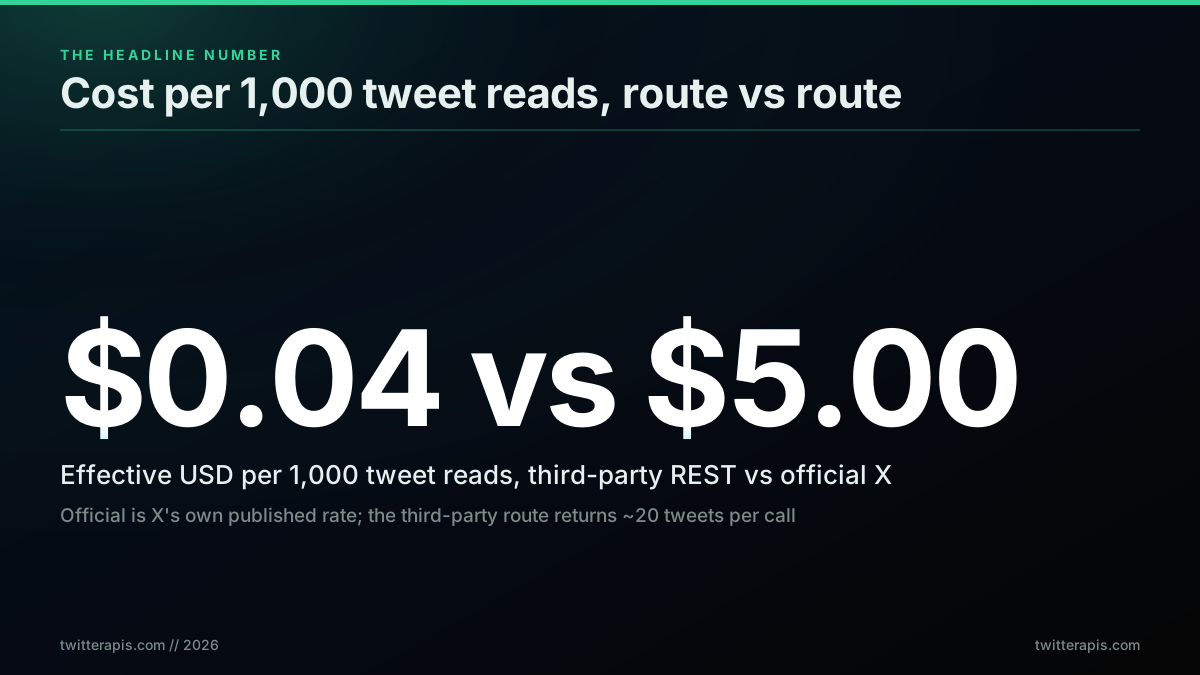
The headline number sets the frame, but price is only one of seven axes
That headline gap is real, and it is also the most over-quoted number in the category. The rest of this guide exists because price alone does not decide the route. Auth, coverage, access friction, terms risk, and reliability all move the answer, and for some workloads they move it back toward the official API.
The Two Routes, Defined
The official X API is the first-party interface published by the platform. It uses OAuth 2.0 for user-delegated actions, a normalized response shape, and a pay-per-use credit model that replaced the old free tier. A third-party Twitter API is any service that returns the same Twitter and X data through its own infrastructure, typically with a single Bearer token and a denormalized response shape. Both cover the core objects, tweets, profiles, followers, search, and direct messages, but they diverge sharply on cost, setup, and the fine print.
The platform itself now frames direct programmatic access as a paid, terms-bound activity rather than an exotic one. That reframing is the backdrop for the entire decision, because it means pay-per-use is the default lens for both routes.

GrainStats 🌾
@GrainStats
just a heads up, X (twitter) has opened up their API to allow pay-per-use scraping, posting and messaging to anyone as long as it does not break their terms of service what that means in plain text: more likely than not, tweets/posts will be scraped more often by bots searching…

The key phrase there is "as long as it does not break their terms of service." That single clause is why the terms-and-compliance axis is not a footnote. It sits alongside price as a first-class input, and it is where the official route quietly earns some of its decisions back. For a pure cost drill-down on the official platform specifically, our Twitter API v2 comparison is the deep-dive that sits underneath this framework, and the X API pricing change breakdown tracks how the official rates moved during 2026.
The Seven Axes, On One Screen
Before the details, here is the whole decision on a single grid: the official X API against the third-party category, scored across the seven axes that determine the route. Read it as a starting map, not a verdict, because your specific workload will weight these axes differently.
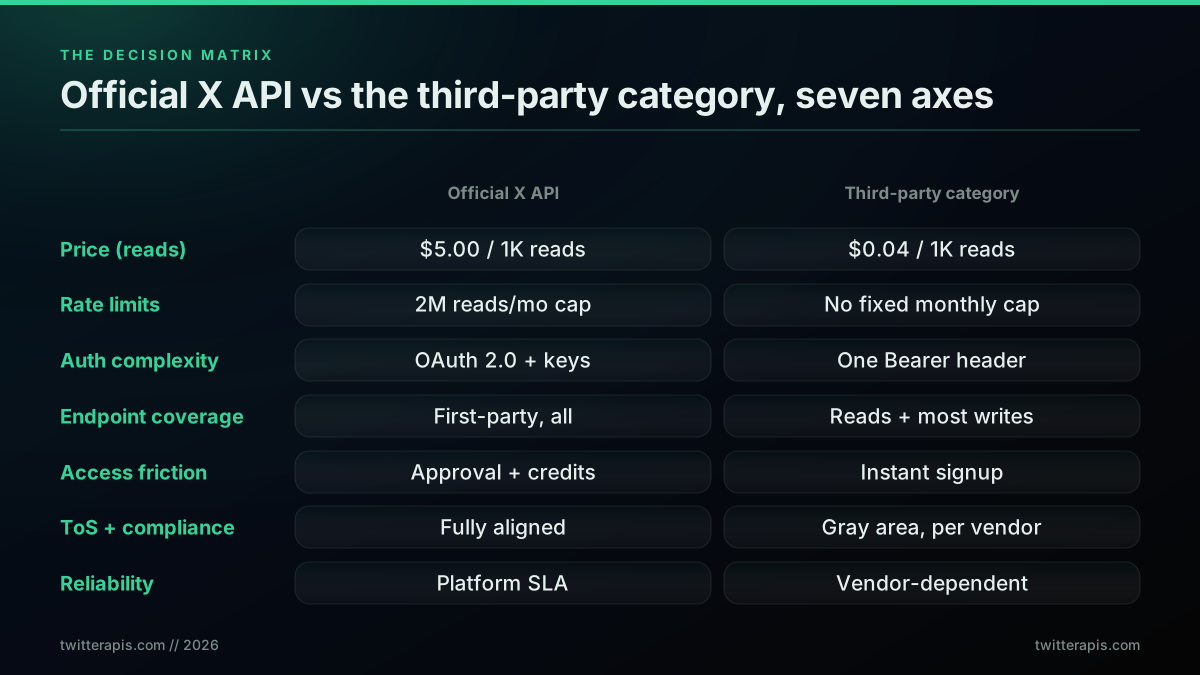
The seven-axis decision matrix, official versus the third-party category
Here is the same matrix as a table you can copy into your own decision doc. The point of writing it out is that no single column wins every row, which is exactly why "which is better" is the wrong question and "which fits this workload" is the right one.
| Axis | Official X API | Third-party category |
|---|---|---|
| Price (standard reads) | About 5.00 dollars per 1,000 tweets (X rate) | About 0.04 dollars per 1,000 tweets on a managed REST route |
| Rate limits and caps | 3 million post reads per cycle cap, then enterprise | No fixed monthly cap on a per-call route |
| Auth complexity | OAuth 2.0 PKCE, up to 4 keys, token refresh | Single Bearer header on most managed providers |
| Endpoint coverage | First-party, includes Ads and full-archive | Reads and most writes, Ads not covered |
| Access friction | Developer account approval, then buy credits | Instant signup, free credits on some providers |
| Terms and compliance | Fully aligned, signed compliance endpoints | Varies by vendor and data source |
| Reliability | Platform SLA and status page | Vendor-dependent, wide quality range |
Now take each axis in turn. Every section leads with the short verdict, then the detail, because the verdict is usually enough and the detail is there when a row is close.
Axis 1, Price
For standard read workloads a third-party REST API is roughly two orders of magnitude cheaper per record than the official X API. According to X's published pay-per-use rates, standard post reads cost about 0.005 dollars each, which is 5.00 dollars per 1,000 tweets. A managed third-party REST provider such as TwitterAPIs charges 0.0008 dollars per call that returns about 20 tweets, an effective 0.04 dollars per 1,000 tweets. The gap narrows only for owned-account data, where X's April 2026 update introduced a 0.001 dollars owned-read rate that applies to your own account's tweets and followers, not to third-party reads.
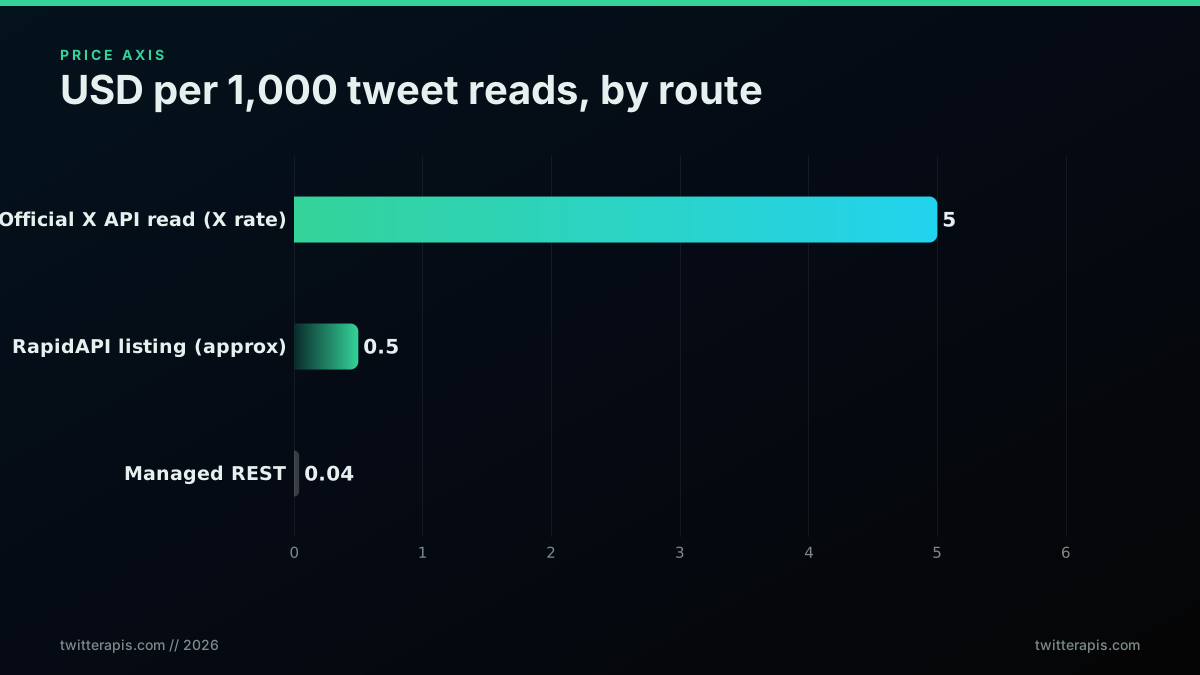
Price axis: cost per 1,000 tweet reads, official rate is X's own
The reason the gap is so wide is unit economics, not a discount war. One managed call that returns 20 tweets replaces 20 official post reads plus, often, 20 user reads for author data. That batching is the whole lever. It is also why the raw per-call number can be misleading: a third-party call that looks slower or pricier than a single official read is usually cheaper and faster once you divide by the objects it returns. For the money side normalized the same way this post normalizes it, see our Twitter API cost benchmark and the cheapest Twitter API ranking, and the live cost calculator for your own volume.
The community shorthand for this axis is blunt: if the official API is expensive for a read job, developers route around it.

Stat Arb
@quant_arb
In case anyone doesn't know... if you want to scrape Twitter, or any site that doesn't let you scrape it, but has an expensive API: Use RapidAPI. Anyone can create their own API and sell it. I can get all the public functions of the Twitter API for $50/mo and 100k requests p.m.
That take, from Source: @quant_arb on X, names a real sub-type of the third-party category, the marketplace listing, and it also names its risk, which is that "anyone can create their own API and sell it." Cheap and variable is a real tradeoff, and it feeds directly into the reliability axis later. Price is where the third-party category wins hardest, but winning one axis does not win the decision.
Axis 2, Rate Limits and Volume Ceilings
The verdict here favors the third-party route for large jobs, because the official API's hard monthly ceiling ends jobs that a per-call route would finish. On the official pay-per-use plan, post reads cap at 3 million per monthly billing cycle, and there is no gradual path between that cap and an enterprise contract X declines to price publicly. A single viral event that pushes you over the ceiling forces an immediate jump. A managed per-call third-party API imposes no fixed monthly cap, so cost scales linearly with usage and a big backfill does not hit a cliff.
The rate-limit conversation among practitioners is almost never about a single request. It is about whether a large job survives to completion, which is a ceiling question wearing a rate-limit costume.
Best way to pull Twitter/X data at scale without getting rate limited to death?
That thread is the axis in one line. The person does not care about a single call's limit, they care whether the job finishes. On the official API the answer is bounded by the 3-million ceiling and the 15-minute rolling windows per endpoint. On a per-call third-party route the answer is bounded by how many workers you run, which is an engineering choice you control. For the endpoint-by-endpoint official numbers, our Twitter API rate limit guide and the rate limits reference lay out the windows.
Start building with TwitterAPIs
$0.0008 a call, about $0.04 per 1,000 tweets at 20 tweets a page. $0.50 free credits. No credit card required.
Axis 3, Auth Complexity
The third-party route wins this axis decisively for read workloads, and it is the single biggest non-cost reason developers switch. The official X API requires a developer account, up to four OAuth keys, request-signing code, callback URLs, and handling for a two-hour access token that must be refreshed from a stored refresh token. Production teams commonly spend four to eight hours getting OAuth right. A managed third-party REST API replaces all of it with one Bearer header and a working call in under fifteen minutes.
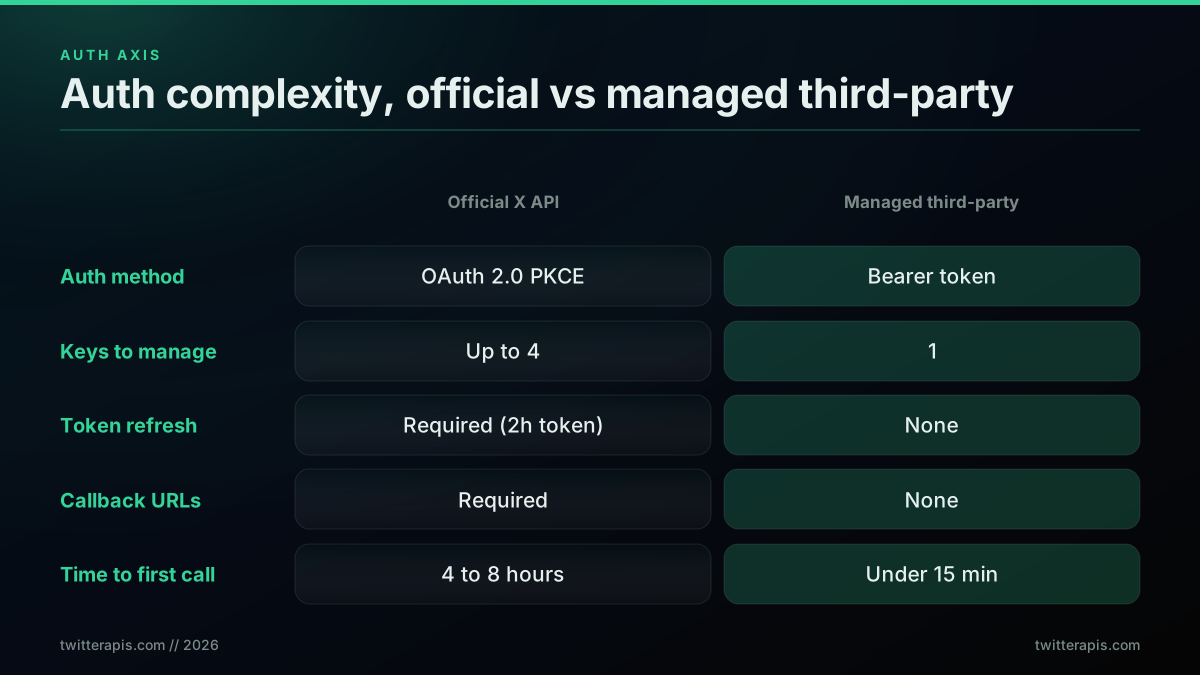
Auth axis: OAuth 2.0 machinery versus a single Bearer header
The nuance that keeps this honest is that OAuth is not overhead when you actually need it. If your app acts on behalf of signed-in users, the whole point is that a user grants scoped access to their own account, and only user-delegated OAuth can do that. A third-party Bearer key cannot impersonate a signed-in user. So the auth axis is not "OAuth bad, Bearer good." It is "OAuth is a cost you should only pay when the workload requires acting as a user." For a pure read pipeline it buys nothing, which is why the Python tutorial and the Node.js tutorial both show a one-header call rather than an OAuth dance.
The Code Contrast: Auth in Practice
The clearest way to feel the auth axis is to read the two routes side by side. The snippets below are illustrative and generalized, not copy-paste production code, but they show the shape of the work honestly. Start with the official route. Before a single read, you exchange credentials for a token, a standard OAuth 2.0 step documented in the official X API docs:
# Official X API: step 1, obtain an app-only bearer token
curl -u "$CONSUMER_KEY:$CONSUMER_SECRET" \
  --data "grant_type=client_credentials" \
  "https://api.x.com/oauth2/token"
That returns a token you then attach to every read, and for user-delegated actions you replace this app-only flow with the full OAuth 2.0 PKCE dance, scopes, callback URL, and a refresh loop for the two-hour token. Only after all of that does a search call go out:
# Official X API: step 2, an authenticated recent-search request
curl -H "Authorization: Bearer $APP_BEARER_TOKEN" \
  "https://api.x.com/2/tweets/search/recent?query=from:nasa&max_results=100"
In Python the same official flow is usually wrapped in a client library like Tweepy so the token plumbing is hidden, but the setup, keys, and scope declarations are still yours to manage. The REST call itself is one line; the ceremony around it is the cost:
# Official X API: a client wraps OAuth, but you still supply four credentials
import tweepy
client = tweepy.Client(
    consumer_key=CK, consumer_secret=CS,
    access_token=AT, access_token_secret=ATS,
)
tweets = client.search_recent_tweets("from:nasa", max_results=100)
Now the managed third-party route. There is no token exchange step, because the API key is a single Bearer header you send directly with curl. The whole auth surface is one line:
# Managed third-party REST: no token exchange, one header
curl -H "Authorization: Bearer $API_KEY" \
  "https://api.twitterapis.com/twitter/tweet/advanced_search?query=from:nasa"
The Python version collapses to the same shape, plain requests with a header, no client library required, which is why read pipelines reach for it:
# Managed third-party REST: one header, denormalized JSON back
import requests
r = requests.get(
    "https://api.twitterapis.com/twitter/tweet/advanced_search",
    headers={"Authorization": f"Bearer {API_KEY}"},
    params={"query": "from:nasa"},
)
tweets = r.json()["tweets"]
The difference is not the search line, which is comparable on both routes. It is everything before it. On the official route you build and maintain an auth subsystem; on the managed route you send a header. When you do need resilience, the work is the same on either side, honoring the documented rate limits with a backoff on any 429 Too Many Requests rather than fighting anti-bot rate limiting, which is a far smaller job than raw web scraping through a proxy pool:
# Both routes: honor the rate limit with a simple backoff
import time
def call_with_backoff(fn, tries=5):
    for i in range(tries):
        resp = fn()
        if resp.status_code != 429:
            return resp
        time.sleep(2 ** i)
    raise RuntimeError("rate limited after retries")
Read those six blocks as a single point: the search request is a wash, the auth surface is where the routes diverge, and the divergence is exactly the OAuth cost the auth axis measures. If your workload never acts on behalf of a signed-in user, you are paying that cost for nothing.
Axis 4, Endpoint Coverage
Coverage is closer than the price axis, and it is the axis where the official API starts winning rows back. Both routes cover recent search, user and follower reads, tweet detail, and replies. The official API additionally covers the Ads and campaign API, full-archive search on paid tiers, and first-party direct-message and write flows through user OAuth. The third-party category covers reads and, on many providers, most write actions, but the Ads API is an official-only surface, and full-archive depth varies by vendor.
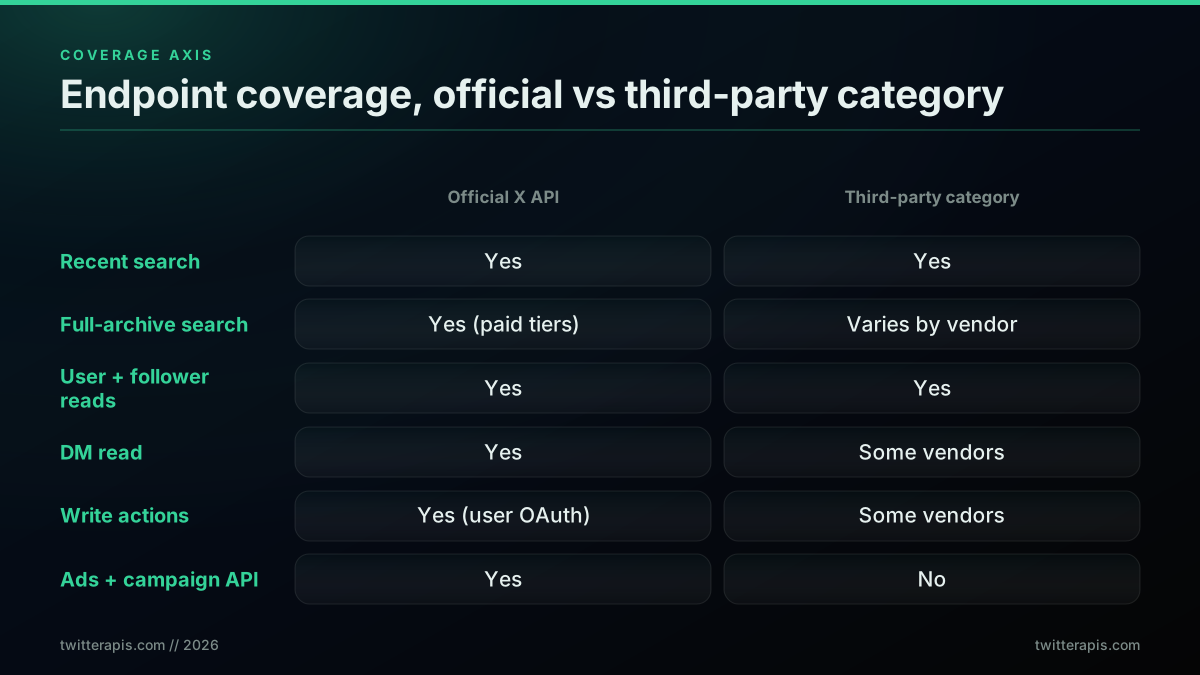
Coverage axis: where the official API still holds exclusive surfaces
The honest reading is that coverage is a tie for the common read and search jobs and a clear official win for advertising data and signed full-archive access. If your roadmap includes campaign spend analysis or a compliance-grade historical corpus, that requirement alone can decide the route regardless of price. If it does not, coverage is a wash and the decision falls back to the cheaper, simpler axes. Some third-party providers do add reach the official tiers gate behind Enterprise, such as verified-follower and mutual-follower reads, which our advanced search operators guide puts to work.
Axis 5, Access and Approval Friction
The third-party route wins on time-to-data, and for a one-off pull it wins by a wide margin. The official path requires creating a developer account, describing your use case, waiting for approval, setting up a project and app in the console, configuring OAuth, generating and rotating tokens, and buying credits before the first request goes through. A managed third-party provider is an instant signup, and several, including TwitterAPIs, hand you free credits at signup with no card.
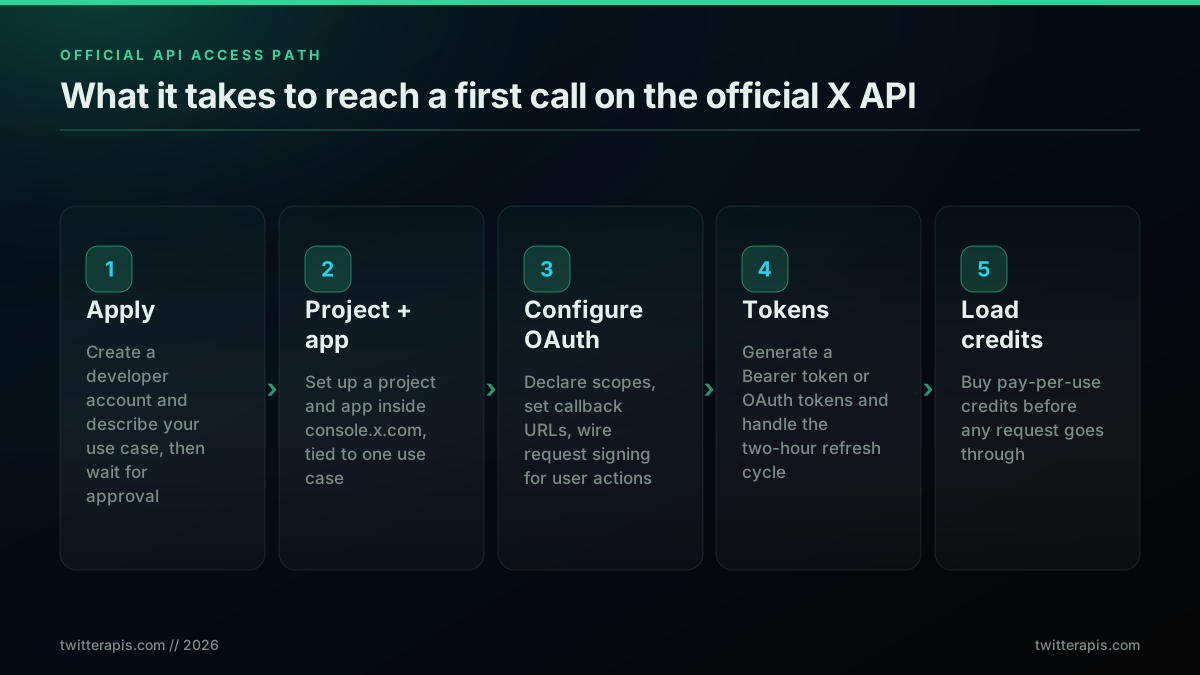
Access axis: the official path to a first call, step by step
Setup time is not a rounding error on a small project. The difference between fifteen minutes and most of a day decides whether an idea gets built at all.
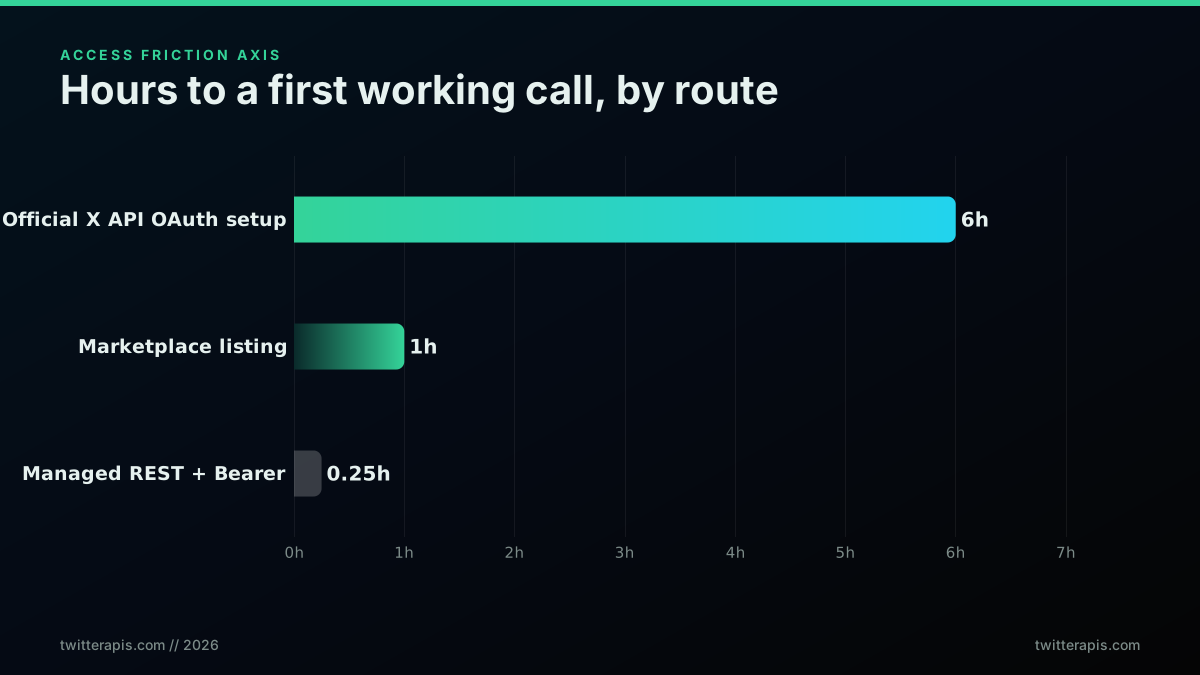
Access axis: hours to a first working call, by route
The demand signal for this axis is loud and consistent. The most common phrasing developers reach for is not "how do I authenticate," it is a complaint about cost that ends in a workaround, which is a friction and price problem stated together.
X / Twitter data is too expensive, so I fixed it
That title, repeated across communities in different words, is the friction axis made visible. When the developer's first framing is "too expensive, so I fixed it," the approval-and-credits path has already lost that decision on friction and price together. For the fast route, our how to get an API key walkthrough and the is the Twitter API free breakdown get you to a first call quickly, or you can sign up and use the free credits.
The cheapest pay-as-you-go Twitter API. Try it free.
$0.0008 a call, about $0.04 per 1,000 tweets at 20 tweets a page. $0.50 free credits. No credit card required.
Axis 6, Terms of Service and Compliance Risk
This is the axis where the official X API earns real decisions, and pretending otherwise would make this guide the same single-vendor advocacy it is trying to replace. First-party access is fully terms-aligned by definition and offers signed compliance endpoints for regulated data handling. Third-party access sits outside that first-party alignment, and its risk depends heavily on the sub-type: a managed provider running structured infrastructure is a different risk profile from a raw scraper routing through residential proxies.
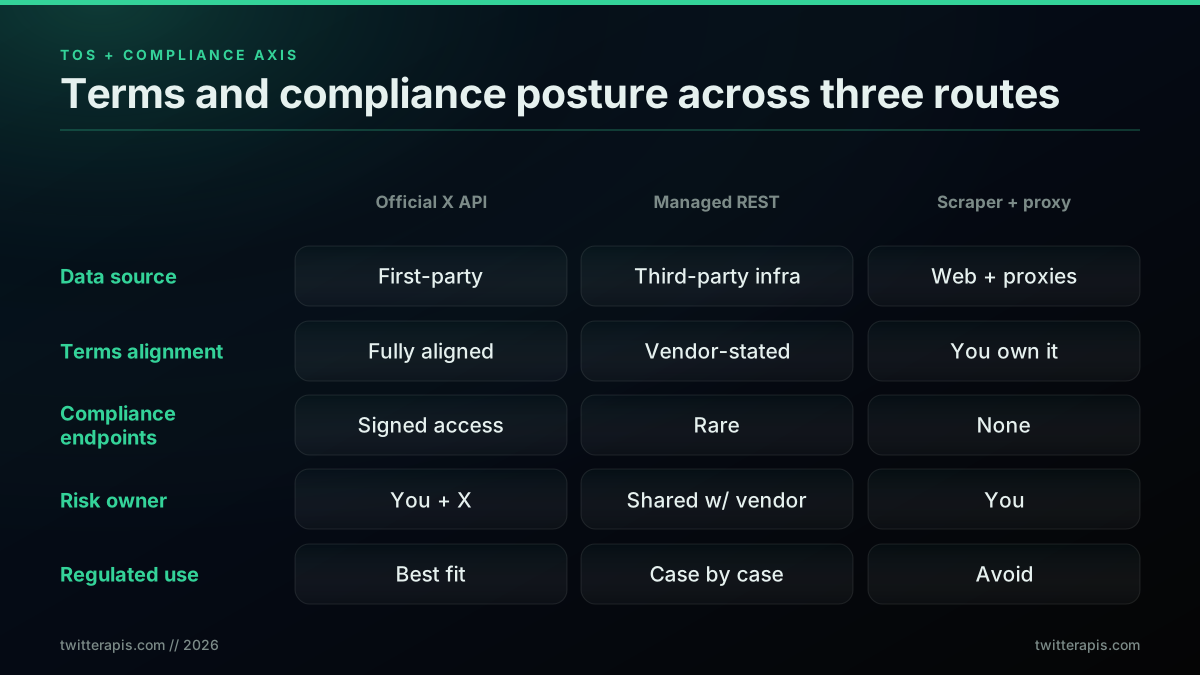
Terms axis: three routes, three very different risk postures
The community view here is worth taking seriously rather than waving away. Developers who have poked at the platform directly report that access is technically easy, which is a double-edged observation: easy access is not the same as compliant access.

David Buchanan does not tweet anymore
@David3141593
Something that surprised me while doing this, was that twitter has none of the most obvious anti-bot mitigations. I aggressively scraped the graphql API, right at the rate limit, impersonating the web client but with a default Python useragent - and the API didn't seem to mind?
The lesson embedded there is that technical feasibility is not the same as terms alignment, and a self-run scraper puts the full compliance burden on you. Independent reviews of the category say the same thing plainly: third-party data access operates in an unsettled compliance space, and you should evaluate each provider's approach to terms of service alignment and weigh your own organization's risk tolerance. If a signed data-handling agreement is a hard requirement, that requirement decides the route, and it decides it in favor of the official X API. The residential-proxy sub-type in particular is the highest-maintenance and highest-risk path, which our best residential proxies for Twitter scraping breakdown covers for the cases that still need it.
Axis 7, Reliability
Reliability is the axis where "third-party" is too broad a word to score, so this one splits by sub-type. The official API offers a platform SLA and a status page. A managed third-party REST provider offers vendor-stated reliability that ranges from excellent to unremarkable. A marketplace listing resold by an individual can be the least reliable option regardless of its price, and a self-run scraper is only as reliable as the maintenance you put in. So the reliability verdict is not official-versus-third-party, it is "pick a serious managed provider or accept the maintenance."
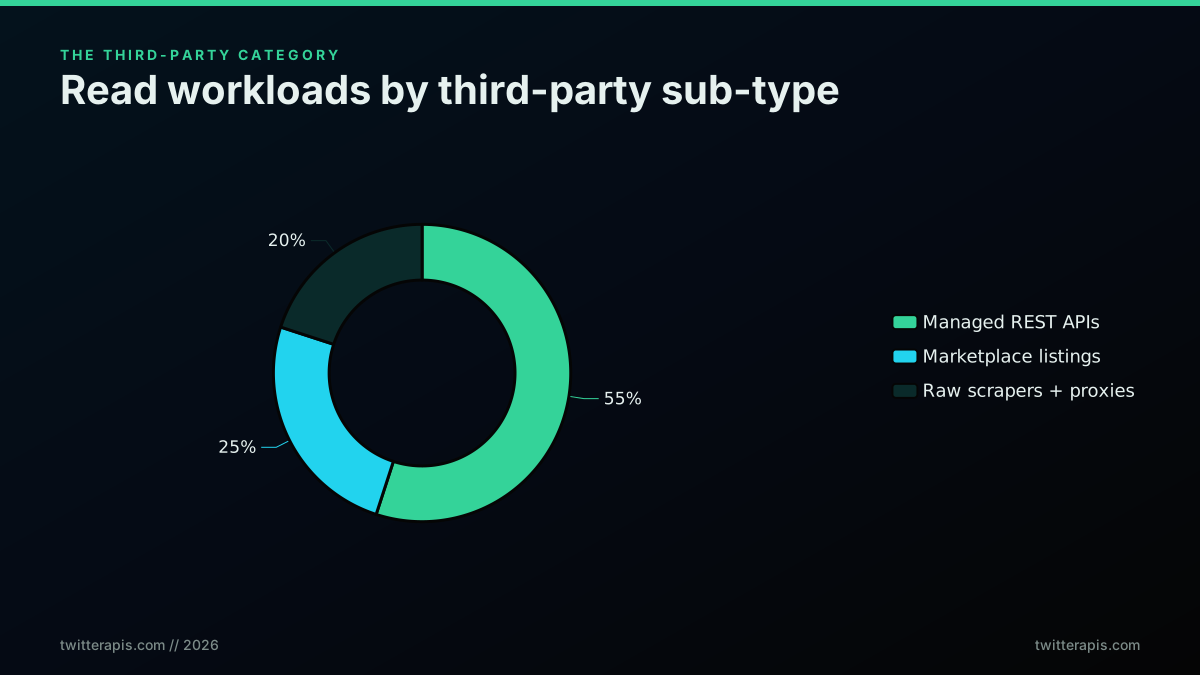
The third-party category is not one thing, and reliability tracks the sub-type
That split matters because most "the third-party API was flaky" stories are really "the cheapest marketplace wrapper was flaky" stories. The managed REST sub-type exists precisely to buy back reliability without buying back the OAuth and cost overhead of the official route. When you evaluate a provider, weigh its uptime and support posture the same way you weigh its price, because a route that fails halfway through a job has no effective cost advantage. Our best Twitter API for scraping piece scores providers on exactly this reliability-versus-price balance.
When the Official X API Is the Right Answer
Put the seven axes together and a clean rule emerges: the official X API wins whenever the workload needs a first-party capability that a Bearer key cannot substitute for. That is a short but non-negotiable list. It includes acting on behalf of signed-in users through user-delegated OAuth, the Ads and campaign API for advertising data, full-archive search older than seven days at compliance grade, and any use requiring a signed data-handling agreement.
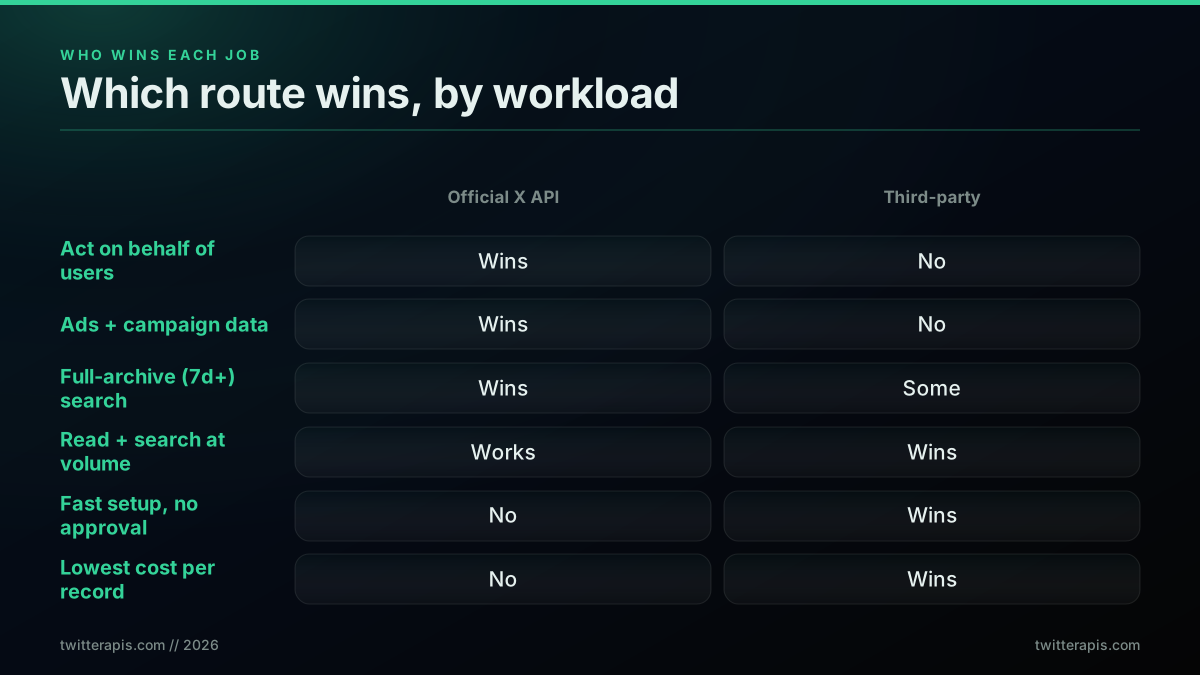
The honest split: the workloads where each route wins outright
If your project is on that list, the price and friction axes do not save you, because the third-party category simply does not offer the capability. In those cases the higher per-record cost and the OAuth setup are the price of admission, and they are worth paying. Getting an official key is a documented process, and the video below walks the current 2026 steps end to end.
https://www.youtube.com/watch?v=aZz9D0FdevA
That walkthrough is a fair picture of the official on-ramp: it is not hard, it is just heavier, and for the write, Ads, and compliance cases the weight buys something real.
When a Third-Party Twitter API Wins
For everything else, which is most read and search work, the third-party route wins on the balance of price, friction, auth, and rate limits. Data collection, research corpora, analytics dashboards, sentiment pipelines, monitoring systems, and bots that read public data all fit this profile. They do not act on behalf of end users, they do not need the Ads API, and they run at volumes where the 3-million-read ceiling is a liability rather than a comfort. The demand for this route is not niche, it is the mainstream question in the community, and it is usually phrased as some version of "how do I read tweets at scale without the official API." A sentiment model that ingests a hundred thousand posts a day, a price-alert bot that watches a cashtag, and a research team building a longitudinal corpus all share the same shape: high read volume, no user-delegated actions, and a hard sensitivity to cost per record. On the official API each of those hits the monthly ceiling and the OAuth tax for no benefit, while on a per-call third-party route each scales linearly and ships in an afternoon.
Within the third-party route, the managed REST sub-type is the default recommendation because it holds the cost and friction advantages while buying back most of the reliability. This is where TwitterAPIs sits: one managed-REST option among several, positioned on price, no-approval signup, and single-header auth rather than as the only answer.
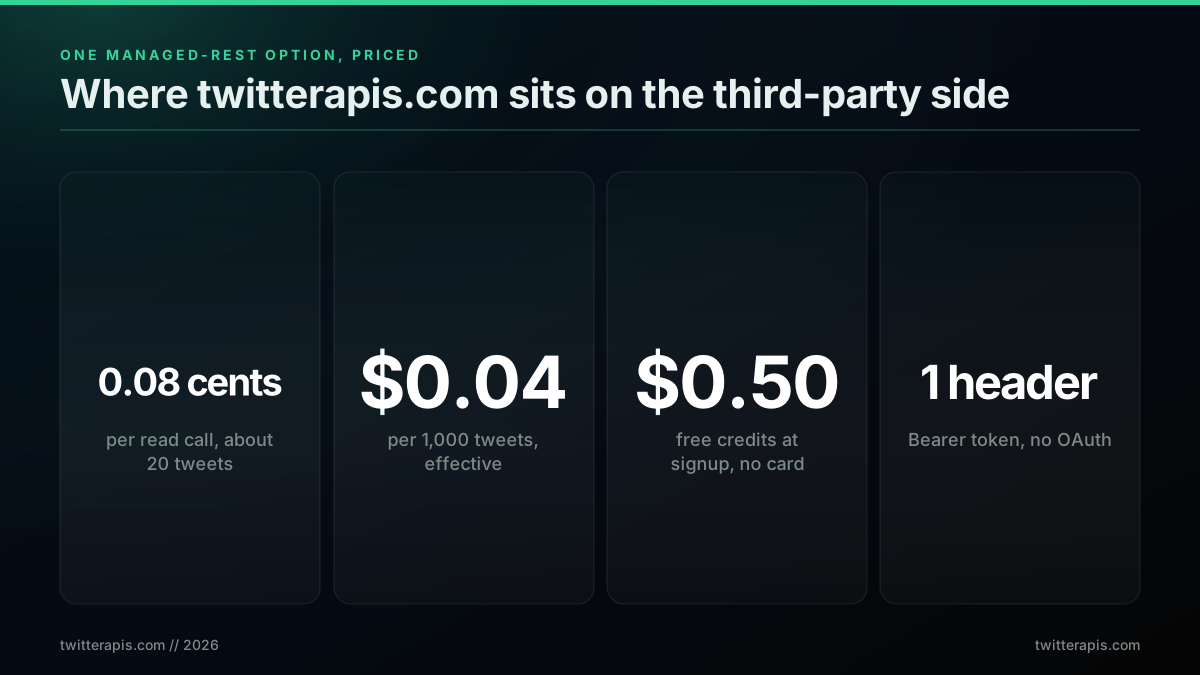
One managed-REST option, priced, on the third-party side of the decision
To be exact about the numbers on that panel, the standard read rate is 0.0008 dollars per call, simple write actions like retweet, follow, and delete are the same 0.0008 dollars, posting a tweet is 0.0016 dollars, pulling a full conversation with the thread endpoint is 0.004 dollars, and signup includes 0.50 dollars in free credits with no card. Whether you pick this provider or another managed one, evaluate it on the same axes, and compare it against the marketplace sub-type our RapidAPI alternative and Apify comparison break down, plus the migration path in moving from twitterapi.io.
The Decision Tree You Can Run
The fastest way to use all of this is to stop comparing products and start running your workload through five questions in order. The first two questions route you to the official API when they are true. The last three route you to a third-party API and then to the right sub-type.
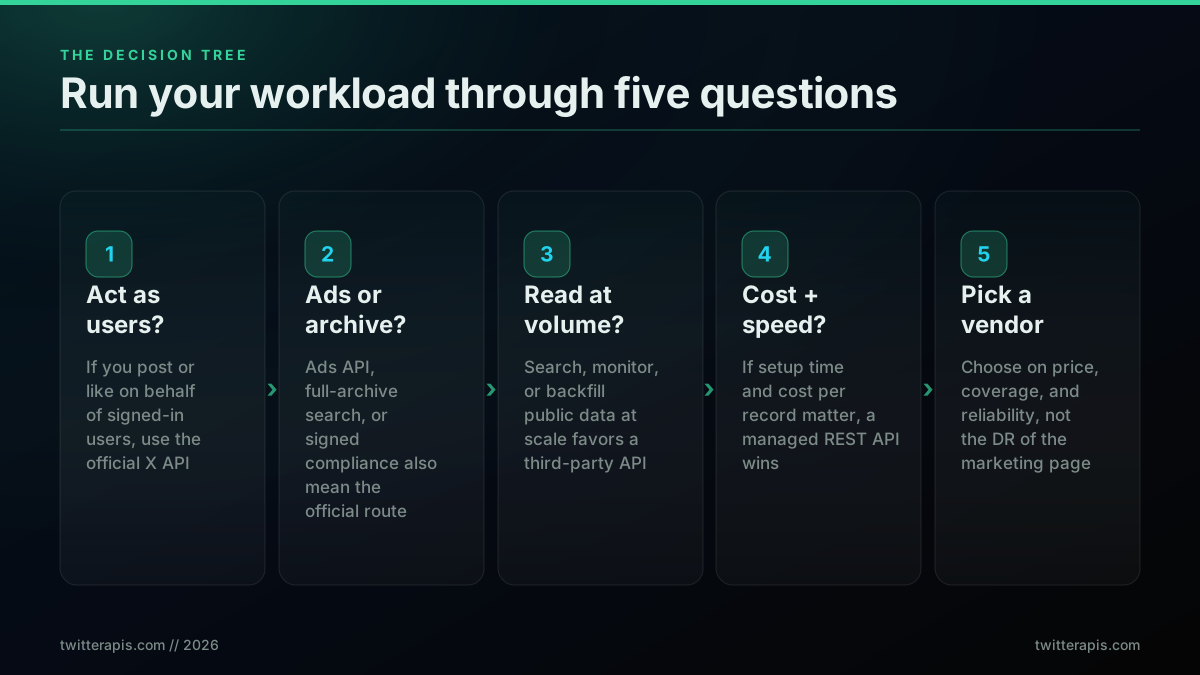
The decision tree: five questions, in order, that name the route
Walk it literally. First, do you act on behalf of signed-in users. If yes, use the official X API. Second, do you need the Ads API, full-archive search, or signed compliance. If yes, use the official X API. Third, are you reading, searching, or monitoring public data at volume. If yes, a third-party API fits. Fourth, do setup time and cost per record matter. If yes, prefer the managed REST sub-type. Fifth, pick a specific vendor on price, coverage, and reliability, not on the domain authority of its marketing page. For the platform-specific drill-down beneath step one and two, the X API v2 versus TwitterAPIs comparison and the MCP server page cover the official surface and the agent-native path respectively, and the pricing page has the current per-endpoint rates.
Run your real numbers through that tree once and the answer stops being a matter of opinion. The official X API is the right tool for a real, bounded set of jobs, and a third-party Twitter API is the right tool for the larger set of read and search jobs where price, friction, and rate limits decide. Neither is universally better. The framework, not the brand, picks the route.
One last caution before you commit. The most expensive mistake in this decision is not picking the wrong route, it is picking a route for the wrong reason. Choosing the official API because it feels safer, without a write, Ads, or compliance requirement to justify it, means paying the OAuth and per-record tax for a comfort you do not need. Choosing the cheapest marketplace listing because the price looks unbeatable, without checking uptime or support, means paying in failed jobs later. Weigh every provider on the same seven axes you weighed the official API on, price it against your real monthly volume in the cost calculator, read the deeper X API v2 breakdown for the platform-specific detail, and let the numbers, not the marketing, name the route. That discipline is the whole point of a framework: it survives the next pricing change, the next new provider, and the next viral spike that blows past a monthly cap.
// sources
Where these numbers come from
Each row is a figure in this post and the artefact it was read from. Prices and limits on this platform move, so check the date on the source before you plan against it.
- X API pricing page
- Backs the cost axis: standard post reads at about 0.005 dollars each, which the post converts to 5.00 dollars per 1,000 tweets, and the April 2026 owned-read rate of 0.001 dollars that applies only to your own account data.
- Official X API developer documentation
- The source for the official-route auth sequence the post shows, where credentials are exchanged for a token before any read can go out.
- RFC 7636, OAuth 2.0 PKCE
- Specifies the PKCE flow the post describes for user-delegated actions, with scopes, a callback URL, and a refresh loop for the two-hour token.
- RFC 6750, the OAuth 2.0 Bearer token scheme
- Defines the single Bearer header that the post contrasts against the official token exchange when it says the managed third-party auth surface is one line.
- X API rate limits documentation
- The documented limits the post says both routes must honor, and the basis for its claim that backoff work is the same on either side.
- MDN reference for HTTP 429 Too Many Requests
- Defines the 429 status the post uses as the backoff trigger in its resilience section.
Frequently Asked Questions
Use the official X API when you need to act on behalf of signed-in users through OAuth, when you need the Ads API, full-archive search, or signed compliance access. Use a third-party Twitter API when you are reading, searching, or monitoring public data at volume, want fast setup with no developer-account approval, and care about cost per record. The decision is not about which is better overall, it is about which route fits your specific workload across price, rate limits, auth, coverage, access friction, terms risk, and reliability.
For standard read workloads a managed third-party REST API is roughly two orders of magnitude cheaper per record. TwitterAPIs, one such provider, charges 0.0008 dollars per read call returning about 20 tweets, an effective 0.04 dollars per 1,000 tweets, versus X's 5.00 dollars per 1,000 tweets for standard reads. The gap narrows for owned-account data at X's 0.001 dollars rate, and it closes entirely when you need capabilities only the official API offers, so the cost advantage is real but workload-specific.
It depends on the provider and the data. Third-party access sits outside first-party terms alignment, so you should evaluate each vendor's stated approach to compliance and your own organization's risk tolerance. Providers that source public data through structured infrastructure differ sharply from raw scrapers running through residential proxies. For regulated or contractual use the first-party route with signed compliance endpoints is the safer posture, which is one of the honest reasons the official X API still wins some decisions.
For reading public data, no. A managed third-party REST API replaces OAuth 2.0 PKCE with a single Bearer header, so there are no callback URLs, no scope declarations, and no two-hour token refresh loop to maintain. If you need to perform write actions on behalf of a specific account, some third-party providers accept a per-request account token that is passed in and never stored, but true user-delegated OAuth for arbitrary signed-in users remains an official-API capability.
It can be, depending on the workload. According to X's published pay-per-use rates, standard post reads run about 0.005 dollars per post, which is 5.00 dollars per 1,000 tweets, and post reads are capped at 3 million per monthly billing cycle before an enterprise contract is required. X publishes no enterprise price: past the cap it routes you to a contact form. X's April 2026 update added a lower 0.001 dollars owned-account read rate, but that applies only to your own account's data, not third-party reads. For read-heavy jobs a third-party REST API is far cheaper per record.
Choose the official X API when your application acts on behalf of signed-in users, for example posting or liking through user-delegated OAuth, when you need advertising data through the Ads API, when you need full-archive search older than seven days, or when a signed data-handling agreement is a compliance requirement. In those cases a third-party Bearer key cannot substitute for a first-party OAuth session, and the official route is the correct answer despite the higher per-record cost.
A managed REST API is a provider running its own infrastructure with a single Bearer key, versioned endpoints, and stated reliability. A marketplace listing, such as an API sold on a general marketplace, is often a thin wrapper another developer resells, which can be cheap but variable in uptime and support. Raw scrapers and proxy tools are a third sub-type that gives you the most control and the most maintenance. Most read workloads map best to a managed REST API on the balance of cost, coverage, and reliability.
For a data pipeline, analytics dashboard, sentiment model, or monitoring system that reads public tweets and profiles at volume, a managed third-party REST API is usually the better fit because it is cheaper per record, faster to set up, and imposes no monthly read cap. The official X API adds OAuth complexity and a 3-million-read ceiling that provide no benefit when you are not acting on behalf of end users. Reserve the official route for the write, Ads, and compliance cases that genuinely need it.
Check out similar blogs
More guides on the Twitter/X API, scraping, and pricing.
Fastest Twitter API in 2026: 7 Providers Ranked by Real Response Time and Throughput
Which Twitter (X) API is actually fastest in 2026? We measured our own response time, pulled every published benchmark, and ranked 7 providers by real per-tweet latency, throughput, and the wall-clock time to finish a 100,000-tweet job.
Build vs Buy: Should You Build Your Own Twitter/X Monitoring Tool? (2026)
Buying a listening seat costs $29 to $2,000 a month depending on the vendor. Building costs real engineering hours plus a data bill. Here is the real math behind the twitter monitoring tool build vs buy decision, priced both ways.
How to Track a Tweet's Performance in Real Time with the X API
Poll a tweet's engagement counts over time with the X API, compute a views-to-likes ratio, and read the quote-tweet layer to tell an organically growing launch tweet from a boosted one. Tested Python and curl.

What "Rate Limited" Actually Means on X (Every Limit, Measured)
"Sorry, you are rate limited" is one message covering two different systems: a consumer action ceiling and a developer API window. Here is what the term means, the current numbers for both, where it came from, and how long it actually lasts.
The Twitter API Developer Reference (2026): Endpoints, Rate Limits, Error Codes and Pagination
A single indexed reference for the Twitter/X API in 2026: the endpoint catalog, how authentication and bearer tokens work, the rate limits behind every 429, what error codes 401, 403, and 429 mean, cursor pagination, response shapes, and the real per-call cost of each call.
How to Choose a Twitter/X API in 2026: The Complete Buyer's Guide
A decision framework for choosing a Twitter/X API in 2026: the seven criteria that actually matter (pricing model, data coverage, rate limits, auth, reliability, compliance, migration cost), a use-case decision tree, and where each path wins.
What You Can Build With the Twitter/X API: 20+ Real Use Cases (2026)
A 2026 field guide to what you can actually build with the Twitter/X API: 24 real use cases across listening, monitoring, audience graph, research, and bots, each mapped to the endpoint that powers it and the real per-call cost.

Fetch a Full Twitter Thread via API in One Call (2026)
How to pull an entire Twitter thread, the root tweet plus every connected tweet in the chain, in a single API call with the tweet/thread endpoint, instead of walking replies by hand. Live-tested code in curl, Python, and Node.js, with the real per-call cost.