GUIDE
"Twikit Broke Again": Migrating From Free Twitter Scraping Libraries to a Reliable Paid API (2026)
Twikit is unmaintained and breaking again in 2026. Real GitHub issues, real Reddit evidence, and the exact code to migrate a broken twikit script to a managed API.
Per our own spec, 65 of 112 endpoints bill $0.0008, 24 are free, and 23 sit between $0.0016 and $0.01. Every price ships inside our published OpenAPI document as an x-cost-usd field, so any figure in this post can be checked against the contract that bills it rather than taken on trust.
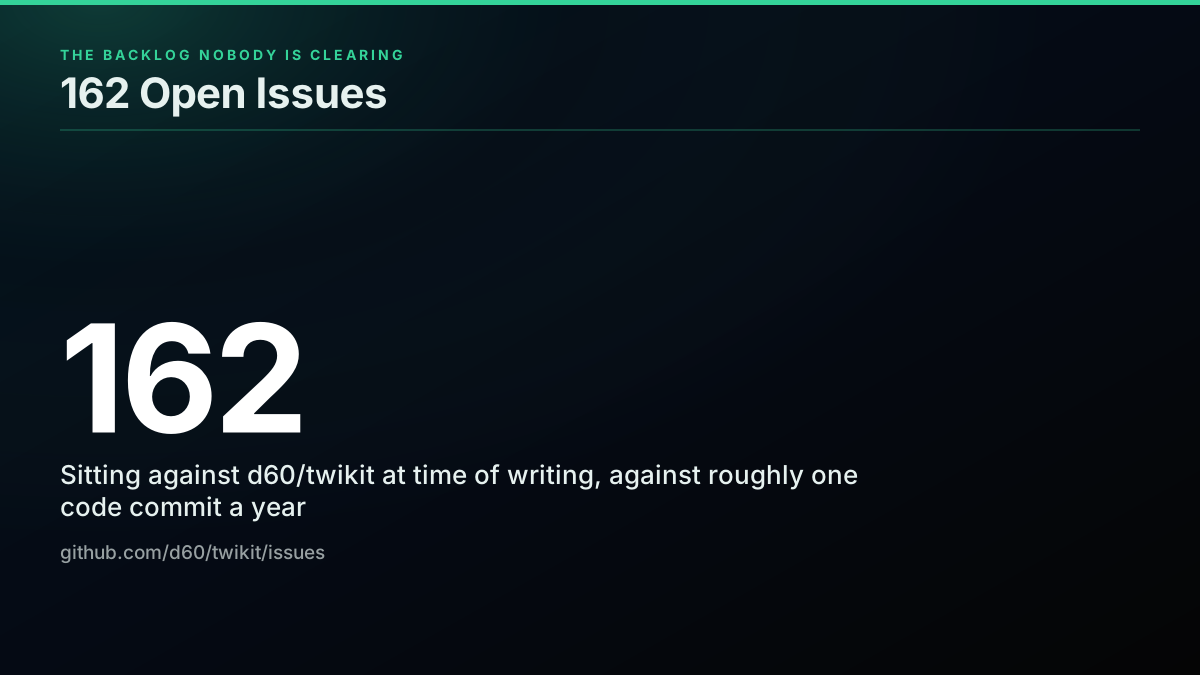
If your twikit-based script started throwing errors again this year, you are not imagining a pattern: the library's GitHub repository has seen one real commit since April 2025, carries 162 open issues, and has multiple unresolved 2026 breakage reports including one filed the same week this guide was published. The fastest fix is not another patch, it is swapping the login-based scrape call for a single authenticated request to a managed API that never puts an account on the line.
TL;DR: Twikit works by logging into X with a real account and replaying the internal endpoints the web app uses, so every time X changes those endpoints without notice, twikit breaks until someone reverse-engineers the fix. That has happened repeatedly through 2026: a March breakage (
ClientTransactionfailing), an AprilKeyError, a July login block from a new biometric-style challenge, and a fresh 429 error report the same week we published this. A third-party fork, twifork, exists specifically to patch what upstream has stopped fixing. Below is real evidence for all of that, the actual before-and-after migration code for the two most common twikit use cases (keyword search and a user timeline pull, in both Python and Node.js), and a real cost comparison across the paid routes, a compute-time-billed platform, ScrapingDog, Scrapfly, and a managed pay-per-call API at $0.0008 a call, about $0.04 per 1,000 tweets, per our pricing page.
Most posts in this category tell you twikit is "unofficial and risky" in the abstract and move on. This one does not stay abstract. We pulled the library's real commit history, read its open issues, and priced the actual paid alternatives, so the migration decision below is made on evidence, not a general warning.
Why Does Twikit Keep Breaking?
Twikit keeps breaking because it was never built on a stable foundation: it authenticates as a real logged-in user and calls X's internal, undocumented web endpoints, which X can and does change without notice, and the project maintaining the wrapper around those endpoints has slowed to roughly one commit a year.
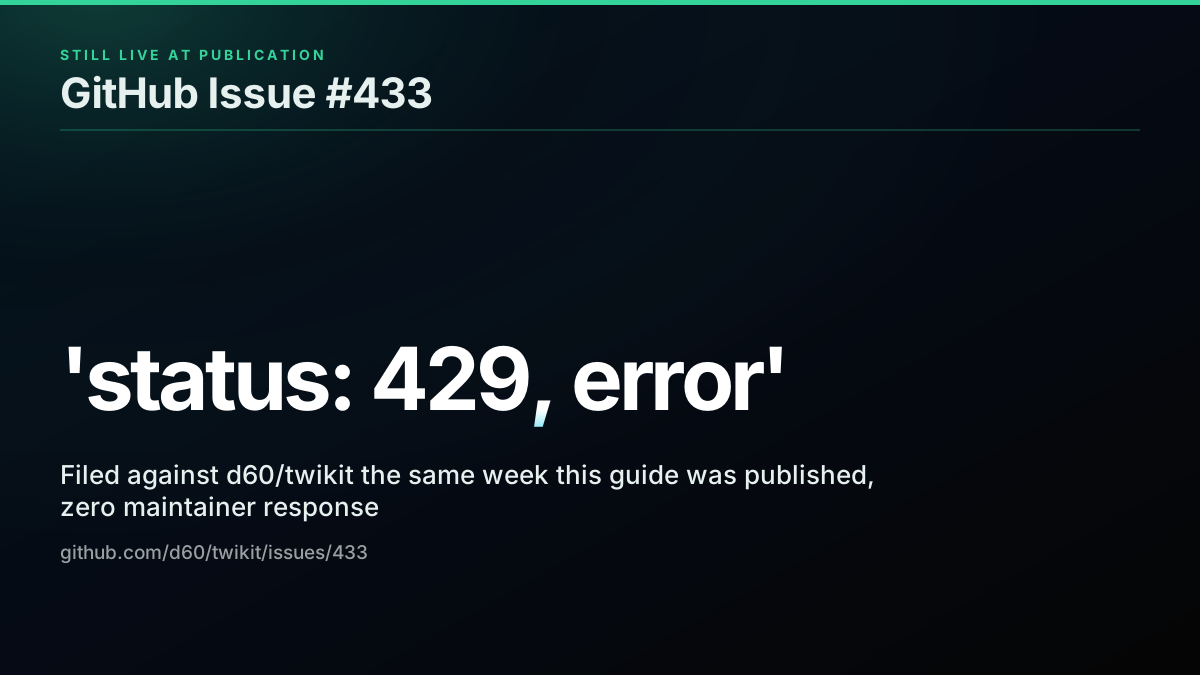
The evidence is dated and specific, not a vibe. Issue #433, filed the same week this guide was published, reports a bare status: 429, error with no maintainer response yet. Issue #408 reports the library failing entirely as of March 18, 2026, with the exact error Exception: Couldn't get KEY_BYTE indices, the signature of X changing its client-side request-signing scheme. Issue #425, filed May 18, 2026, reports a KeyError that has sat open for three months at time of writing. Issue #430, filed July 4, 2026, describes a new "palm-liveness scan" blocking login, a biometric-style anti-automation check twikit's account-login model has no way around. None of these four are fixed as of publication.
The breakage is not limited to the login call itself. Twikit's session model, cookies saved from a real login and replayed on the next run, is its own separate fragility surface: a developer in r/webscraping ran into exactly this trying to work out whether a saved auth_token had expired, since there is no documented way to check without the login endpoint itself, twikit exposing no secret key to verify it against.
Using twikit python lib, how to validate if auth_token expired?
That is a second, independent failure surface on top of the endpoint-breakage pattern above: even when twikit itself has not changed, a script still has to reason about session state a real API key never requires, and our Twitter API authentication guide covers how a key-based flow avoids that entire class of problem.
What Do the GitHub Issues Actually Say?
The pattern across twikit's open issues is consistent: real, specific, dated breakage reports that sit unaddressed for months, which is what "unmaintained" looks like in practice rather than in theory.
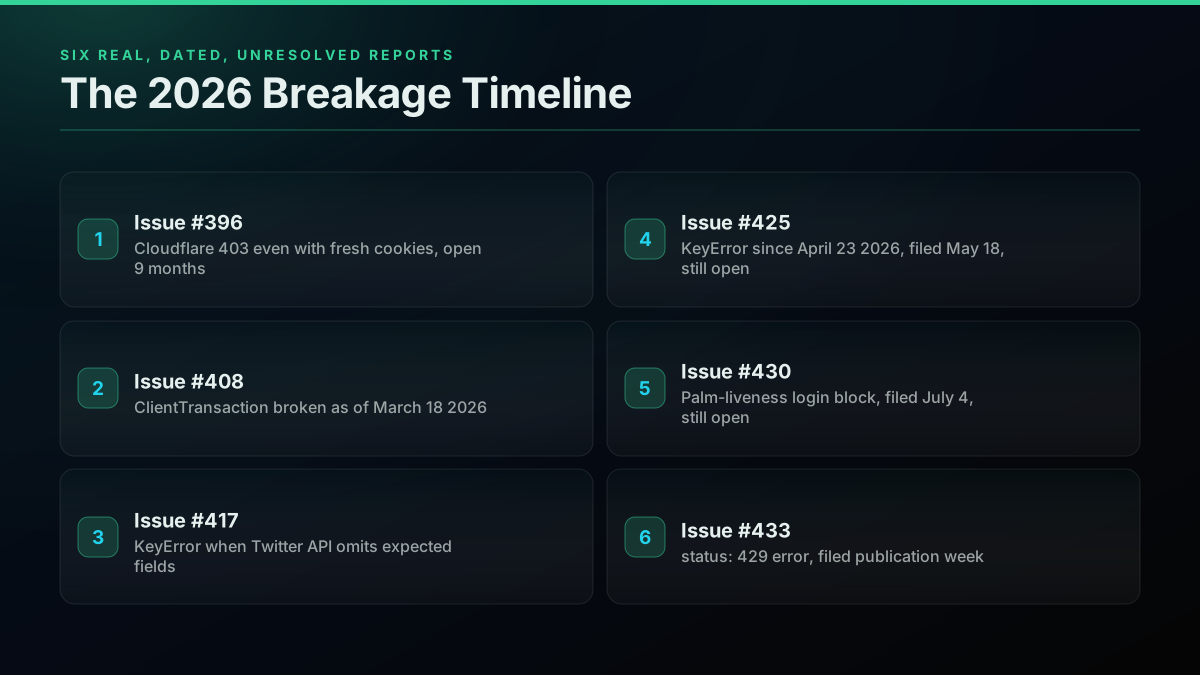
Beyond the four already cited, issue #417 reports a KeyError inside the library's own User.__init__ and Client.request methods "when Twitter API omits expected fields", a symptom of X's response shape shifting under the library. Issue #396 (mirrored on the independent tracker issues.ecosyste.ms since the original has accumulated six comments over nine months with no resolution) reports requests returning a Cloudflare 403 "even with fresh cookies", meaning X's bot-detection layer is now catching twikit's traffic outright. One user summarized the drift plainly in a GitHub discussion thread: "I have been using Twikit for a few months now and things have started to not work recently. Whenever I try to simply even login, I get a twikit.errors."
Is Twikit Still Maintained?
Barely, by commit-history evidence rather than by anyone's claim. The last substantive code commit to d60/twikit landed April 14, 2025; the only two commits since then, in July 2025 and March 2026, were README edits, not code fixes.
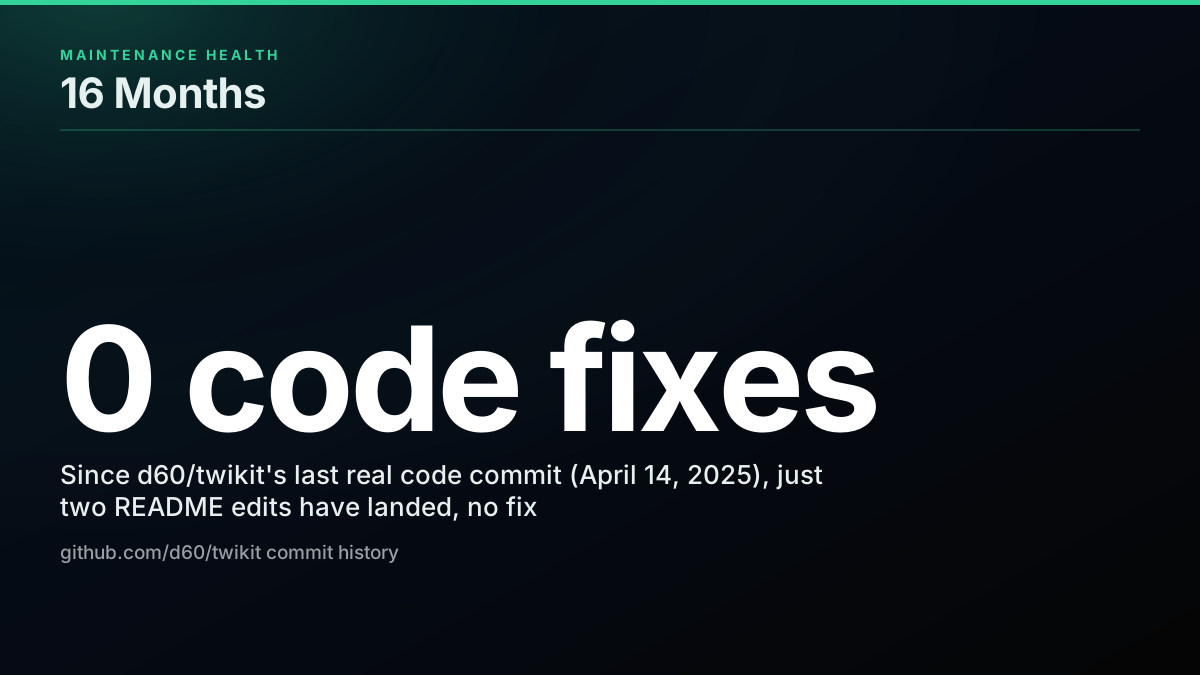
Maintenance health is the single best predictor of whether a scraping library survives the next platform change, because a scraper's entire job is tracking a moving target. Sixteen months with no real code commit, just two README edits in that stretch, against six or more dated 2026 breakage reports sitting open, is not a library keeping pace with its foundation. The strongest independent confirmation of that gap is that a third party built twifork, described plainly in its own package listing as "a maintained fork of d60/twikit, fixed for the 2026 breakages that make the upstream release unusable." Nobody forks a project that is still being kept current; a fork existing is a community verdict, not our opinion.
What Are Developers Actually Saying?
The demand signal behind this migration is a real, specific complaint, not a hypothetical: a developer hit the official API's price, tried twikit as the free workaround, and found it broken too.
The X API is expensive af. Any alternatives?
The original post is specific about the numbers: reading roughly 10,000 tweets a day and posting 100 times a day priced out to about $1,500 a month on the official API, which the poster could not justify. Our Twitter API cost breakdown runs that same math against the current rate card, and our cheapest Twitter API ranking prices the managed field the poster never got to. Their own words on the free workaround: "I tried twikit, but it's not maintained anymore and full of bugs." That is not our framing of the library, it is a developer who tried it this year and hit the same wall the GitHub issues document. One reply in that same thread, from a developer with real experience in the space, warned that "any unofficial method will get your account flagged pretty quick if you do 100 a day", which is exactly the account-ban risk the next section covers in detail.
What Happens to the Account You Log Twikit Into?
Real accounts get restricted or banned for automated use through twikit, and this is a documented pattern across multiple independent reports, not a rare edge case.
Because twikit authenticates as a real logged-in user rather than through sanctioned API credentials, X's automation detection has no way to distinguish "a developer's monitoring script" from "a bot" once it flags unusual login or request patterns on that account. A builder testing twikit for a Django side project put it in three words after their account was suspended: "very painful." Our Twitter bot detection guide covers what actually trips that detection and why a login-based tool sits closer to the trigger than a key-based one. That risk compounds with the breakage risk above: not only can the script stop working when X changes an endpoint, the account behind it can be gone entirely, with no support ticket that resolves it, because the automated use itself is what triggered the flag.
Stop Babysitting a Login-Based Scraper
A managed Bearer key reads public tweets at volume with no account on the line and no upstream breakage to chase.
Can a Login-Based Scraper Power a Production Monitoring Pipeline?
For anything that runs unattended and continuously, brand monitoring, a trading signal, a live dashboard, a login-based scraper is a worse foundation than its per-tweet simplicity suggests, because the two risks documented above (breakage and ban) both scale with exactly the kind of sustained, high-frequency polling a production pipeline needs.
A monitoring workload is a demanding read pattern by nature: you are polling a set of keywords or accounts continuously, often around the clock, and a silent gap in the stream is a gap in whatever decision the data feeds. Run that pattern through twikit and both failure modes compound. The account-ban risk in particular scales the wrong direction: X's automation detection is tuned to catch sustained, patterned activity from a single account, so the more valuable your monitoring pipeline becomes (the more often it polls, the longer it runs unattended) the more it resembles exactly the traffic shape that gets an account flagged. A production pipeline that goes down silently because its twikit-authenticated account was suspended overnight is a worse outcome than a script that throws a visible error, because nobody sees it happen until the gap in the data is already there. A managed API removes both dimensions of that risk at once: no account to flag, and no internal endpoint to break out from under a running job, because the provider's own infrastructure absorbs the platform-side volatility rather than passing it through to your script. Our real-time mention monitoring guide covers building exactly this kind of pipeline on a key-based route from the start, and our build vs buy comparison frames the same decision one level up, whether to build any of this yourself at all.
Start building with TwitterAPIs
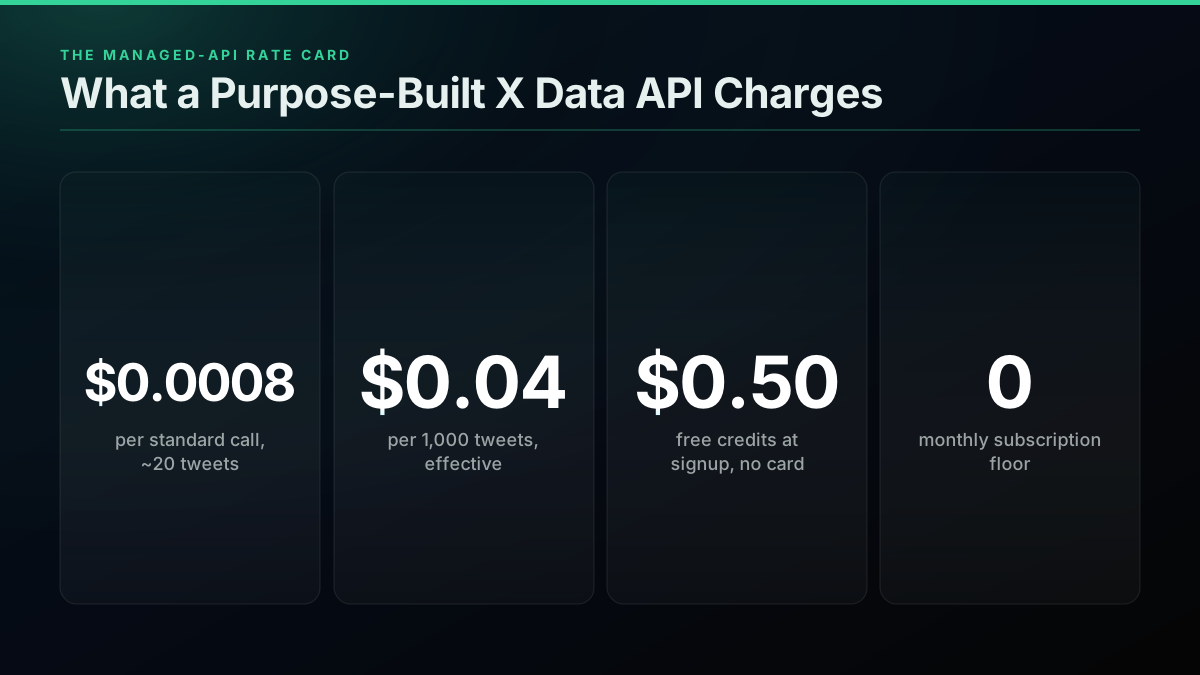
$0.0008 a call, about $0.04 per 1,000 tweets at 20 tweets a page. $0.50 free credits. No credit card required.
Same Task, Two Ways: Migrating a Keyword Search Off Twikit
Nothing clarifies the migration like the actual code, so here is the single most common twikit use case, searching tweets for a keyword, before and after.
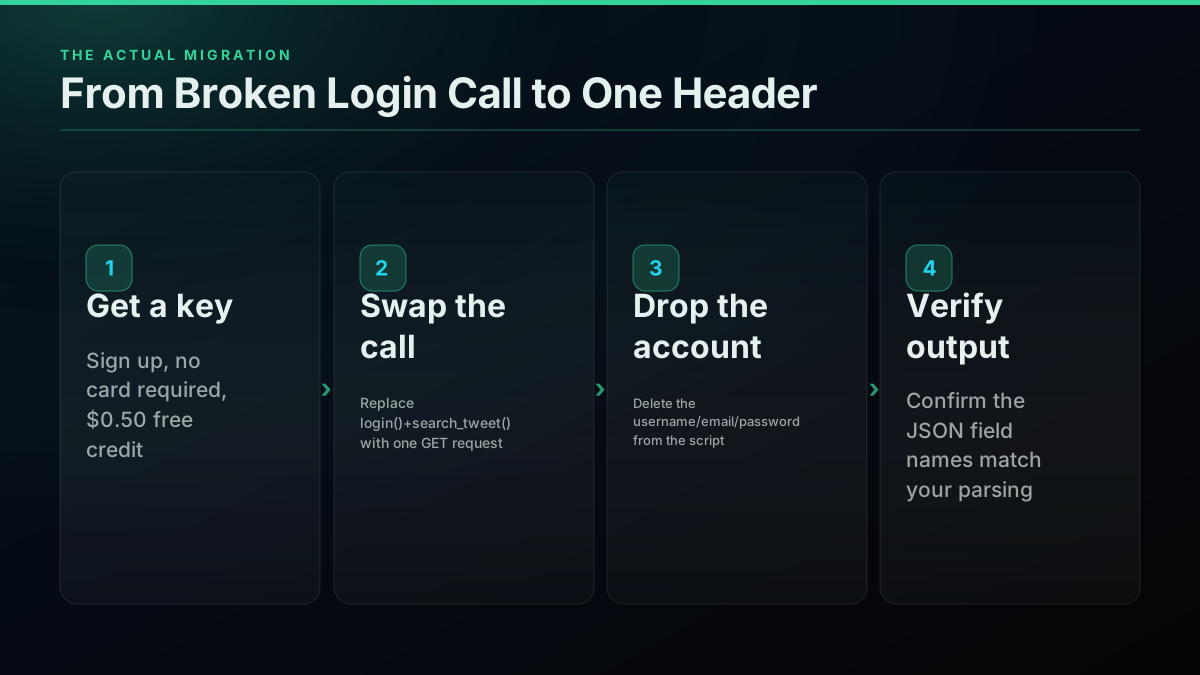
Here is the twikit version, which needs a real account login and an async event loop before it returns a single tweet:
# Before: twikit (logs in with a real account, no API key, breaks on X changes)
import asyncio
from twikit import Client

client = Client("en-US")

async def main():
    await client.login(auth_info_1="USERNAME", auth_info_2="EMAIL", password="PASSWORD")
    tweets = await client.search_tweet("python", "Latest", count=100)
    for tweet in tweets:
        print(tweet.id, tweet.text)
    # If X has changed an internal endpoint or signing scheme since your last
    # run, this call is exactly where a fresh KeyError or 429 shows up.

asyncio.run(main())
And the managed-API version, one authenticated HTTP request, no login, no session to keep alive:
# After: a managed API, one Bearer header, no account on the line
import requests

r = requests.get(
    "https://api.twitterapis.com/twitter/tweet/advanced_search",
    headers={"Authorization": "Bearer YOUR_API_KEY"},
    params={"query": "python", "product": "Latest"},
)
tweets = r.json()["tweets"]
for tweet in tweets[:100]:
    print(tweet["id"], tweet["text"])
The migration mechanically is a five-minute edit: swap the await client.login(...) and await client.search_tweet(...) pair for one requests.get(...) call, drop the account credentials entirely, and remove the asyncio wrapper if nothing else in the script needs it. The field names differ slightly (tweet.id versus tweet["id"]), which is the only real adjustment beyond the call itself.
A Second Migration: Pulling a User's Recent Timeline
Keyword search is not the only thing most twikit scripts do, so here is the same before-and-after for the other common case, pulling a user's recent tweets.
The twikit version needs the same login handshake, plus a second call once you have the user object:
# Before: twikit, fetch a user's recent tweets (still needs the same account login)
import asyncio
from twikit import Client

client = Client("en-US")

async def main():
    await client.login(auth_info_1="USERNAME", auth_info_2="EMAIL", password="PASSWORD")
    user = await client.get_user_by_screen_name("nasa")
    tweets = await user.get_tweets("Tweets", count=50)
    for tweet in tweets:
        print(tweet.id, tweet.text, tweet.created_at)

asyncio.run(main())
And the managed-API equivalent, again one authenticated request:
# After: managed API, fetch a user's recent tweets, one Bearer header
import requests

r = requests.get(
    "https://api.twitterapis.com/twitter/user/tweets",
    headers={"Authorization": "Bearer YOUR_API_KEY"},
    params={"username": "nasa", "count": 50},
)
tweets = r.json()["tweets"]
for tweet in tweets:
    print(tweet["id"], tweet["text"], tweet["created_at"])
The shape of the migration repeats: the login call and the object-chasing (get_user_by_screen_name then get_tweets on the returned object) collapse into one request with the username as a parameter. Anywhere your script currently branches on a twikit.errors exception to catch a login failure, a rate limit, or a session expiry, that branch simplifies to a normal HTTP status check, because there is no session to expire in the first place.
Does This Affect Non-Python Projects Too?
Yes. Twikit is a Python library specifically, but the underlying problem, an unofficial client built on X's internal web endpoints, is not language-specific, and equivalents exist in JavaScript and other ecosystems with the identical failure mode.
A Node.js project using an unofficial, login-based X wrapper is exposed to exactly the same two risks documented above: the wrapper breaks whenever X changes the internal endpoint it depends on, and the account it logs into carries the same suspension exposure. The shape of the code is the same too, a login step and a scrape call standing in for one HTTP request:
// Before: an unofficial, login-based X wrapper in Node (same auth model as twikit)
const { Client } = require("unofficial-x-client");

const client = new Client();

async function main() {
  await client.login({ username: "USERNAME", email: "EMAIL", password: "PASSWORD" });
  const tweets = await client.searchTweets("python", { count: 100 });
  tweets.forEach((t) => console.log(t.id, t.text));
  // Same internal-endpoint dependency as twikit: this call breaks on the
  // identical X-side changes, for the identical reason.
}

main();
And the managed-API equivalent, the identical Bearer-header pattern used in the Python examples above, just with fetch in place of requests:
// After: managed API, one Bearer header, no login, no wrapper to patch
const res = await fetch(
  "https://api.twitterapis.com/twitter/tweet/advanced_search?query=python&product=Latest",
  { headers: { Authorization: "Bearer YOUR_API_KEY" } },
);
const { tweets } = await res.json();
tweets.slice(0, 100).forEach((t) => console.log(t.id, t.text));
The fix carries over unchanged, because a managed REST API is language-agnostic by construction: the same Bearer-header request that replaces twikit in Python works identically from Node, Go, or a bare curl command. Our Node.js Twitter API tutorial builds this exact pattern out into a full project, and the "which unofficial library is best in language X" question mostly dissolves once the answer stops being an unofficial library at all.
Billing and Availability for US, UK, Canada, Germany, and Australia Developers
For developers outside the US specifically, the migration decision has a billing and access dimension worth knowing on top of the reliability case above.
Twikit and its forks have no billing at all, only account risk, which is jurisdiction-neutral, there is no developer-account review to clear because there is no developer account. The compute-time platform, ScrapingDog, and Scrapfly all bill in USD by card, with no application review, so access speed is the same regardless of region. A managed X data API such as twitterapis.com also bills in USD per call with no application review to clear and no regional throttling on signup. The one real regional variable in this whole comparison sits on the official X API path, not any of the routes discussed here: applying for official X API access can involve a longer review outside the US, per developer reports, which is part of why unofficial and managed alternatives see so much demand from outside the US in the first place. Currency conversion and any foreign-transaction fee on a USD-billed service come from your card issuer, not the API vendor, and tax treatment (VAT in the UK and Germany, GST in Canada and Australia) on a developer service varies by jurisdiction and by whether you are a registered business, worth confirming with your own accountant before committing a project budget to any of these routes.
What Are the Real Alternatives to Twikit?
The realistic 2026 options split into three groups, and which one fits depends on whether the account risk or the maintenance burden is the problem you are actually trying to solve.
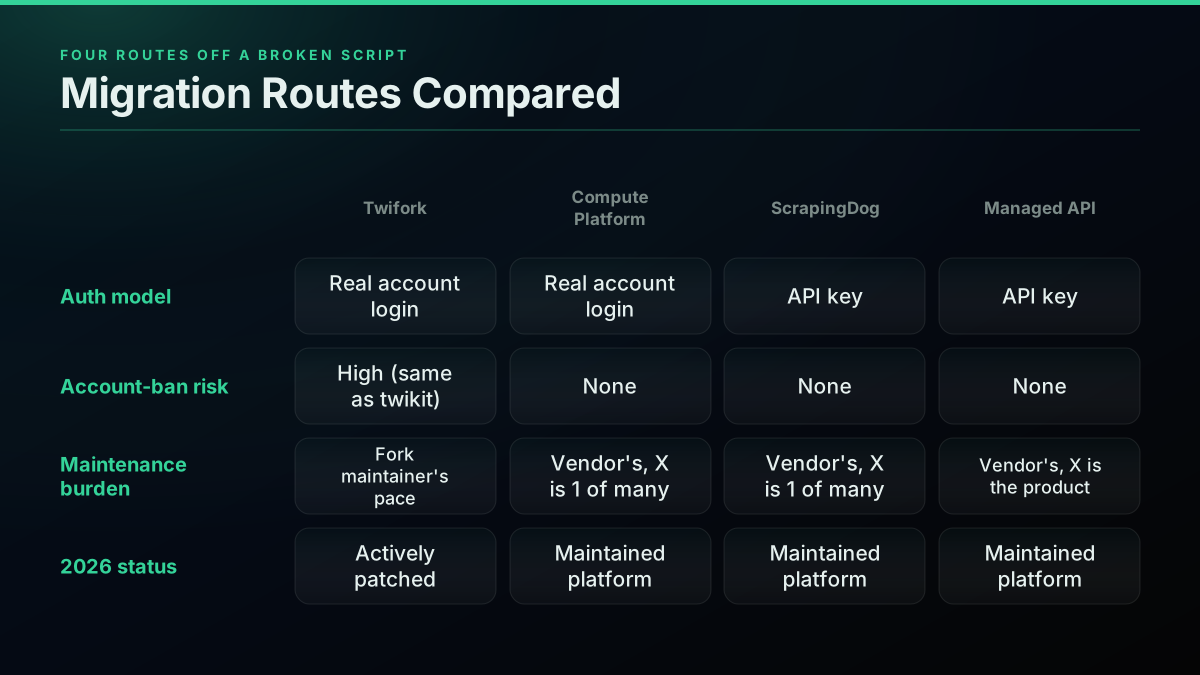
Stay login-based, but switch to a maintained fork. twifork keeps twikit's account-login model, and with it the same account-ban exposure, while patching the specific 2026 breakages upstream has not addressed. This is the smallest code change (often just the import line) but does not remove the underlying risk, only the immediate breakage.
Move to a general-purpose scraping platform. A compute-time-billed platform and ScrapingDog can both reach X data as one target among the many sites they scrape, billed by RAM-hours on the compute-time model or by a flat per-request credit regardless of payload size (ScrapingDog, 5 credits per X request). Both remove the account-login risk, but X is a secondary feature on both, not the product, and each still needs its own upstream anti-bot handling.
Move to a purpose-built X data API. twitterapis.com is built specifically for tweet, user, search, and timeline data, billed per call ($0.0008 standard, no expiring credits), with no account login and no scraper to patch when X changes something. For a project whose whole job is X data, this removes the two failure modes the earlier sections documented (breakage and ban risk) in the same move. Our official X API vs third-party comparison and our best Twitter API for scraping ranking both cover this route in more depth if you land here.
Picking between these three is really a question of what the project needs long-term, not which is cheapest this month. A quick one-off pull for a class project or a weekend prototype rarely justifies a full migration, patch twikit or grab twifork and move on. A project with any production expectation, anything that has to keep working without you watching it, is exactly the case where the account-ban and breakage risk stop being tolerable, and where the fixed per-call price of a purpose-built API becomes easier to reason about than a compute-time bill that depends on how long someone else's scraping Actor happens to run.
Compare Every Migration Route
See how a managed API stacks up against a compute-time-billed scraping platform, ScrapingDog, and Scrapfly on price, setup time, and what breaks when X changes something.
What Does Migrating Off Twikit Actually Cost?
Pulling a real volume of tweets through a paid route costs meaningfully different amounts depending on the vendor's billing unit, not just its headline price.
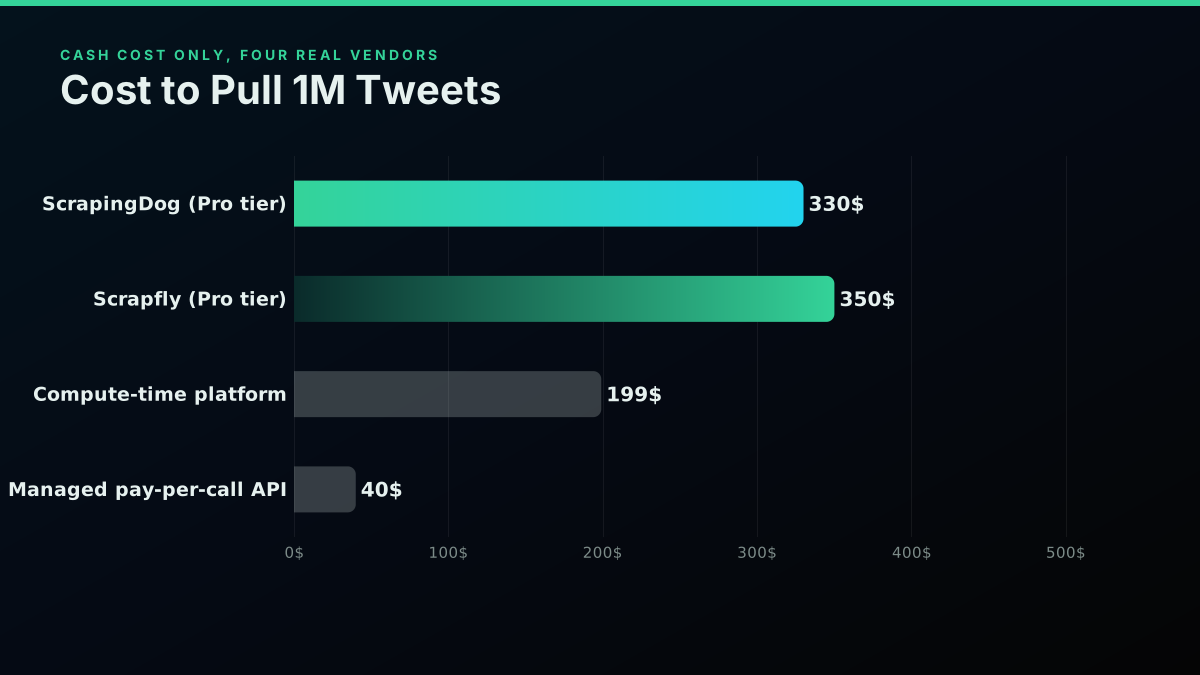
Run the math on 1 million tweets and the routes separate clearly. The compute-time platform bills in compute-units (1 CU = 1GB RAM for one hour, per operator observation of its own published pricing), so the real cost depends on how long its scrape job runs per tweet, not on tweet count directly; a common usage tier runs roughly $199 a month with unused credit expiring. ScrapingDog's X Scraper API costs 5 credits per request; at its $200 Pro tier (3,000,000 credits), that works out to roughly $0.33 per 1,000 X requests, per ScrapingDog's pricing. Scrapfly's Pro plan runs $100 for 1,000,000 credits with $3.50 per additional 10,000, per Scrapfly's pricing, though Scrapfly does not publish a dedicated X/Twitter credit rate, so the real per-tweet cost depends on the scrape configuration used. A managed pay-per-call X data API prices the same million tweets at roughly $40, at $0.04 per 1,000 tweets on a full 20-tweet page, per our pricing page, a fixed, predictable number because the unit is the tweet itself, not compute-time or a generic request credit.
Price Your Real Migration
Run your actual monthly read and write volume against a per-call rate card before you decide whether patching twikit again is cheaper than switching.
Which Vendor's Billing Model Actually Fits Spiky Usage?
The billing MODEL, not just the headline number, is what decides real cost for a project whose volume is not a steady monthly baseline.
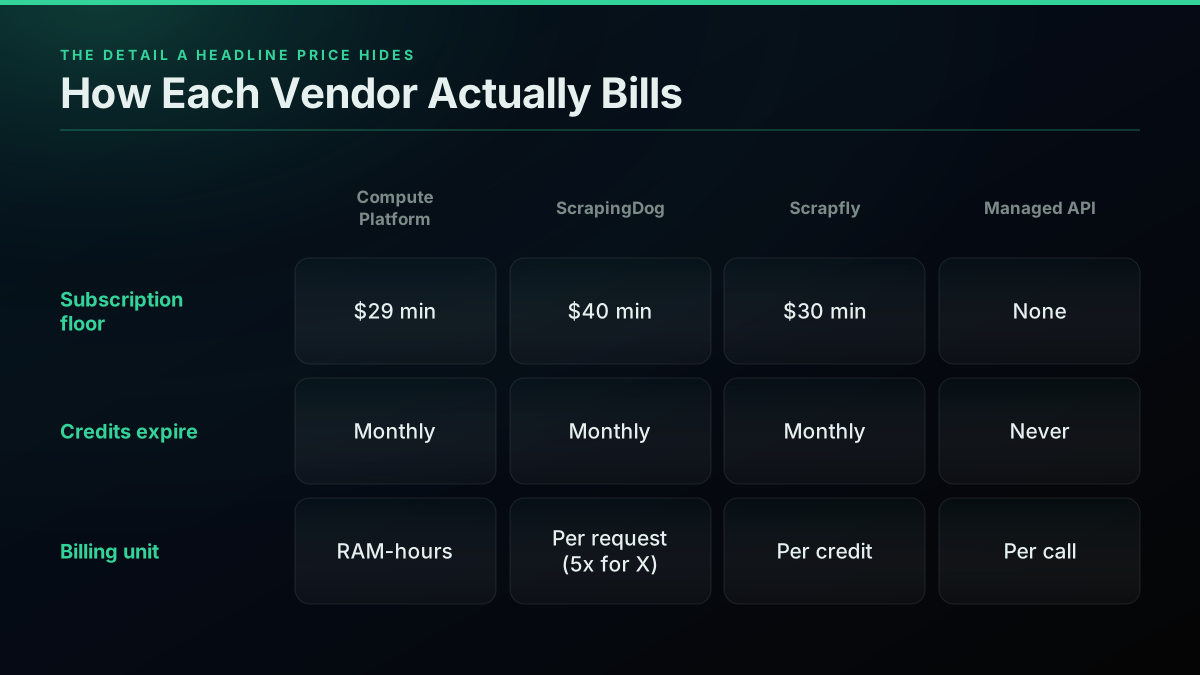
Three of the four paid routes in this comparison impose a monthly subscription floor with credits that expire at the end of each billing cycle: the compute-time platform (roughly $29 minimum, per operator observation of its own published pricing tiers), ScrapingDog ($40 Lite tier minimum for meaningful volume), and Scrapfly ($30 Discovery tier minimum for a real allowance beyond the free trial). A managed pay-per-call API has no subscription floor and credits that do not expire, which matters most for exactly the kind of project a broken twikit script tends to be: exploratory, spiky, or side-project volume where paying a flat monthly floor for months you barely use it is the real hidden cost of the "cheap" scraping-platform tiers.
The cheapest pay-as-you-go Twitter API. Try it free.
$0.0008 a call, about $0.04 per 1,000 tweets at 20 tweets a page. $0.50 free credits. No credit card required.
Six Signs It Is Time to Migrate Now, Not Patch Again
Some twikit breakages are worth patching through; others are the moment to stop.
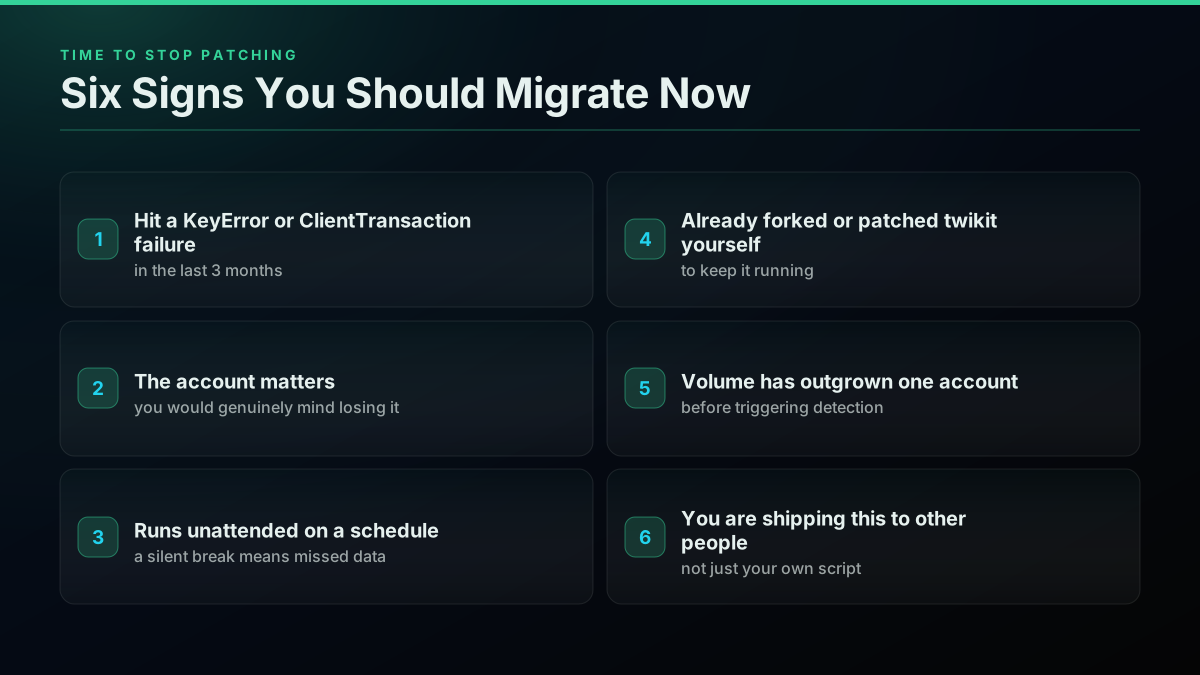
Migrate now if any of these are true for your project: (1) you have hit a KeyError or ClientTransaction failure in the last three months and had to dig through GitHub issues to find an unofficial fix; (2) the account you log twikit into is one you would genuinely mind losing; (3) your workload runs unattended on a schedule, where a silent break means missed data rather than an error you see immediately; (4) you have already forked or patched twikit's source yourself to keep it running; (5) the volume you actually need has grown past what one login-based account can safely push before triggering automation detection; (6) you are building something you plan to ship to other people, where "I'll fix the scraper when it breaks" is not an acceptable answer to a customer.
None of these six requires all of them to be true before migrating makes sense, any single one is a legitimate reason on its own. The pattern worth noticing is that they compound: a project that started as a weekend script (none of the six apply) tends to drift into production use (two or three start applying) without anyone deciding that on purpose, and the point it actually breaks is usually the first moment anyone re-evaluates the foundation it was built on. Treat this list as a periodic check, not a one-time gate, since a script that passes today can fail it in six months as its usage grows.
Is There a Free Twikit Alternative?
Not one that avoids both problems twikit has: account-ban risk and breakage risk. Every genuinely free, keyless route to X data closed when X locked down its unauthenticated guest endpoints, which is the same platform-side change that also broke snscrape; our tweepy vs twikit vs snscrape comparison covers that specific history if you have not picked a starting library yet. What remains free is login-based (twikit itself, or its maintained fork twifork), which trades API cost for account risk rather than eliminating cost. A managed API is not free, but its free signup credits ($0.50, roughly 625 calls, about 12,500 tweets) are enough to fully test a migration before committing any spend, per our rate limits guide and pricing pages.
Real Builders Reaching for Twikit Right Now
The demand for a no-key, no-review automation route is real and current, which is exactly what makes the reliability gap costly rather than academic.

naman/Ahuja
@_palindromic
Built an AI meme bot. 1. Give it context → it generates a meme 2. Auto-posts on X every hour via GitHub Actions + Twikit No server. Just code + memes. Tech: Node.js, Python, GitHub Actions DMs open, still hunting internships. #buildinpublic #OpenToWork #indiedev #TechTwitter
That is exactly the workload pattern most exposed to twikit's failure modes: unattended, scheduled, running on a real account with nobody watching when X changes something upstream. A meme bot breaking quietly is low stakes. The same pattern behind a monitoring pipeline, a lead-gen bot, or anything feeding a live dashboard is not. Our how to build a Twitter bot guide walks the same build with a key-based route from the start.
The demand is not a one-off either. Builders keep reaching for twikit specifically because it removes the developer-account step, not because they have evaluated it against the alternatives:

O.J
@Jamez_Chi
Accessing real-time Twitter data without writing Python scripts or paying for APIs can be challenging. The Twikit API offered a solution, leading to the development of a simple UI anyone can use. 🧵 https://t.co/FhGGCPBCHh
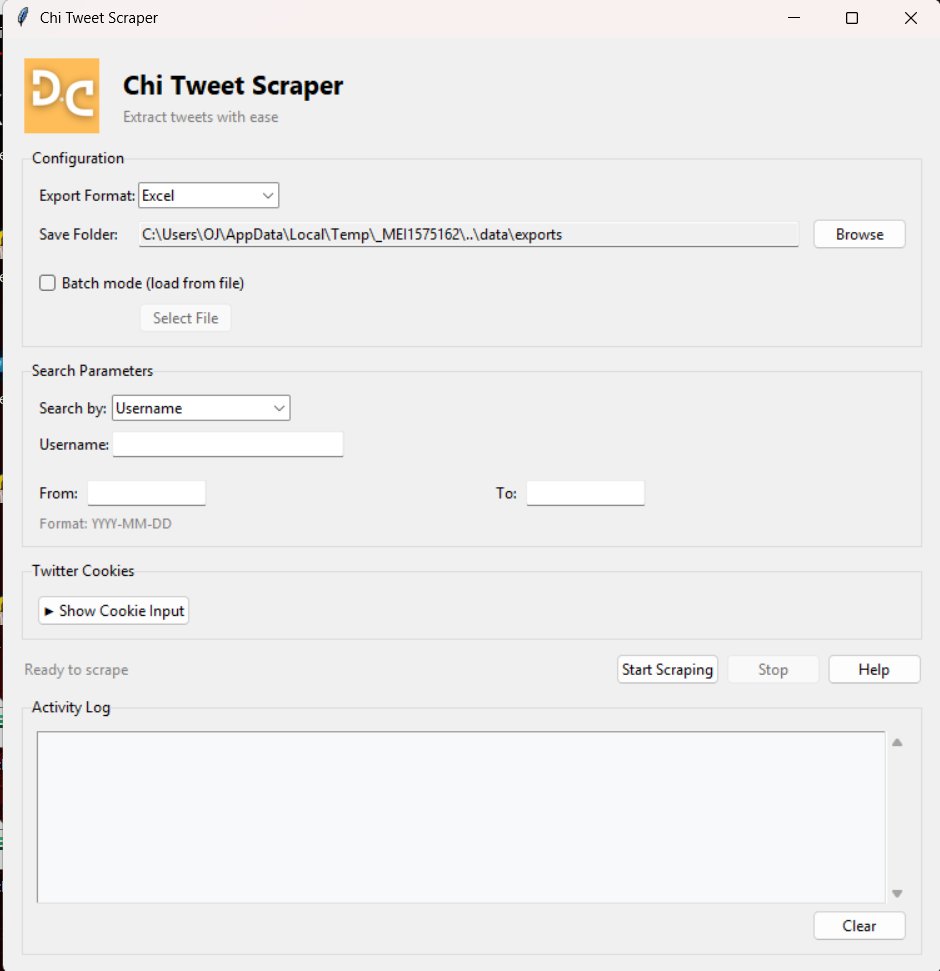
"Without paying for APIs" is doing the same work in that description as "no server, just code and memes" did above: both builders picked twikit for what it skips, a developer-account application and a metered bill, not for anything it does better than a managed route. Our is the Twitter API free guide tracks exactly this pricing-driven detour, and our Twitter API without a developer account guide covers the specific step both of these builders were routing around.
Are Older Twikit Tutorials Still Accurate?
No, and this is worth stating directly because outdated tutorials still rank and quietly assume the library works the way it did when they were filmed.
https://www.youtube.com/watch?v=6D6fVyFQD5A
This video, a once-popular walkthrough for pulling tweet data with twikit, still ranks in search results for twikit setup queries, and its own top comments already flag that the pinned install command (pip install twikit==1.7.6) is outdated against the library's current breaking changes. Watching it is fine for understanding the shape of the old approach; copying its exact code in 2026 means building on version pins and endpoint assumptions that have since shifted underneath it. Verify against the library's own current documentation, or skip the moving target entirely and migrate to a managed API instead. Our complete Twitter API tutorial is kept current against the live API for exactly this reason.
The Managed-API Rate Card
For reference against every route above, here is what a purpose-built X data API actually charges.
Standard reads run $0.0008 per call and return roughly 20 tweets per call, which works out to about $0.04 per 1,000 tweets. Free signup credits are $0.50, no card required, covering roughly 625 calls, about 12,500 tweets, before any spend. There is no monthly subscription floor and credits do not expire. Full endpoint and rate-limit detail is in our rate limits guide and pricing page, and the cost calculator prices your specific read and write mix instead of the generic number here.
Where to Go Next
If you migrated the two examples above and need the rest of the surface area, our Twitter API rate limit guide has the endpoint-by-endpoint ceilings, and how to scrape tweets covers the general pattern beyond keyword search and a user timeline. If you are still comparing routes rather than ready to switch, our best Twitter API for sentiment analysis buyer's guide and our twitterapis MCP server overview cover two of the adjacent decisions this one touches. Coming from a different starting point entirely, our best residential proxies for Twitter scraping guide and our how to choose a Twitter API overview both sit one level up from this specific twikit decision.
The Decision, in One Paragraph
If a twikit-based project has broken more than once this year, the pattern is not going to reverse on its own: the repository's own commit history shows a maintainer pace of roughly one commit a year against a stream of dated, unresolved 2026 breakage reports, and a third party has already forked the project specifically because upstream stopped keeping up. Patching it again buys you until the next X change, not a fix. The realistic paths off it are a maintained login-based fork (same account risk, less friction), a general-purpose scraping platform (removes account risk, X is a secondary feature), or a purpose-built X data API (removes both the breakage pattern and the account risk in one move, at a fixed, predictable per-call price). Run your own numbers in the cost calculator before deciding, and if you land on the managed route, signup includes enough free credit to fully test the migration first.
The evidence in this guide is dated on purpose: GitHub issue numbers, filing dates, and commit timestamps rather than a general "unofficial libraries are risky" caution. That is deliberate, because a maintenance status is exactly the kind of fact that changes month to month, and a reader six months from now should be able to re-run the same check (the repository's own commit history, its open-issue count, whether the specific issues cited above have since been closed) rather than take this post's word for it indefinitely. If twikit's maintenance picks back up and these issues get resolved, the honest update is to say so. As of publication, the pattern points the other way: breakage arriving faster than fixes, and a community fork existing as the clearest signal of where that leaves the original project.
// sources
Where these numbers come from
Each row is a figure in this post and the artefact it was read from. Prices and limits on this platform move, so check the date on the source before you plan against it.
- d60/twikit GitHub repository and issue tracker
- The primary source for every maintenance and breakage claim in this post: commit history, open-issue count, and the specific dated issues cited (#396, #408, #417, #425, #430, #433).
- twifork package listing on libraries.io
- Backs the claim that a maintained fork exists specifically because the upstream project stopped absorbing 2026's breaking changes.
- r/webdev, 'The X API is expensive af. Any alternatives?'
- The real developer thread this post's migration trigger is drawn from, including the original poster's own usage figures and their direct assessment of twikit.
- r/webscraping, 'Using twikit python lib, how to validate if auth_token expired?'
- A second, independent real developer thread showing the session/cookie fragility of twikit's login-based auth model in practice.
- @Jamez_Chi on X, on building a UI around the Twikit API
- A second real, independent tweet corroborating current developer interest in twikit as a no-key route to X data.
- ScrapingDog pricing
- Source for ScrapingDog's per-credit billing and its 5-credits-per-request X Scraper API rate.
- Scrapfly pricing
- Source for Scrapfly's credit-based billing tiers cited in the vendor comparison.
- X API published pay-per-use pricing
- The official-API reference point for the cost comparison.
Frequently Asked Questions
Barely. The last substantive code commit to the d60/twikit GitHub repository landed April 14, 2025; the only two commits since then, in July 2025 and March 2026, were README edits, not code fixes. The repository carries 162 open issues at time of writing, including several unresolved breakage reports from 2026: issue #408 ('ClientTransaction broken as of March 18 2026'), issue #425 (a KeyError reported May 18, 2026 and still open), issue #430 (a login-blocking palm-liveness check reported July 4, 2026, still open), and issue #433 (a 429 rate-limit error reported the same week this guide was published). A third party has published a maintained fork, twifork, explicitly described as 'fixed for the 2026 breakages that make the upstream release unusable.' That fork existing is itself evidence the original is not being kept current.
Developers report real account restrictions and outright bans tied to automated use through twikit, not just script errors. This is a documented pattern, not a rare edge case: builders using it for bots, monitoring, and DM automation have reported accounts flagged and suspended after ordinary, low-volume automated activity. Because twikit logs in as a real user rather than using sanctioned API credentials, X's automation detection treats that traffic the same way it treats any other bot on a real account, which is to say, as a suspension candidate.
No. That is twikit's entire pitch, and the entire source of its fragility: it authenticates with a real X username, email, and password instead of an API key, which is why it needs no developer account or API application. The trade is that a login-based tool is exposed to every anti-bot change X makes to its normal login and session flow, in a way an official or managed API, which authenticates with a stable key rather than a human login session, is not.
On a purpose-built X data API such as twitterapis.com, standard reads run $0.0008 per call, and each call returns roughly 20 tweets, which works out to about $0.04 per 1,000 tweets. Free signup credits ($0.50, no card required) cover about 625 calls, roughly 12,500 tweets, before any spend. A general-purpose scraping platform can also do the job, but the unit is usually compute-time on some platforms or a flat per-request credit regardless of how much data comes back on others (ScrapingDog, Scrapfly), so the real cost per 1,000 tweets varies by provider and plan rather than being a single fixed number.
Twikit authenticates by logging in with a real X account and replaying the same internal, undocumented endpoints the X web app uses, rather than calling a stable, versioned public API. X changes those internal endpoints without notice or a changelog, because they were never meant for outside consumption. Every time X ships an anti-automation update (a new login challenge, a changed request-signing scheme, a tightened rate response) any tool built on that internal surface breaks until someone reverse-engineers the change and patches it. A stable client library cannot fix an unstable foundation.
Swap the login-and-scrape call for a single authenticated HTTP request to a managed API endpoint that returns the same shape of data. There is no account to log into, no session cookie to refresh, and no internal endpoint to reverse-engineer when it changes, because the provider absorbs that maintenance on its own infrastructure. The concrete before-and-after code for a keyword search, the most common twikit use case, is below; most single-endpoint scripts migrate in under an hour once you have a key.
The realistic 2026 options split into three groups. Login-based forks such as twifork keep twikit's access model (and its account-ban exposure) while patching the specific breakages the original has not fixed. General-purpose scraping platforms such as ScrapingDog can reach X data as one target among many, billed by compute-time on some platforms or by flat credit on others, with X support as a secondary feature rather than the product. Purpose-built X data APIs such as twitterapis.com are built specifically for tweet, user, search, and timeline data, billed per call with no account login and no scraper to patch. Which fits depends on whether you need general-purpose scraping or dedicated, reliable X data.
Automated access to X outside its official, sanctioned API generally conflicts with X's terms of service, and a login-based tool like twikit additionally puts the authenticating account at risk of suspension on top of any terms question. Whether a specific use of public data is lawful varies by jurisdiction and by how the data is used, which is a legal question a blog post cannot resolve for your specific case. For anything production-facing or publishable, sanctioned access (the official X API or a licensed managed provider) plus your own legal review is the safer default.
Check out similar blogs
More guides on the Twitter/X API, scraping, and pricing.
Tweepy vs Twikit vs snscrape: Which Twitter Scraper to Use in 2026
Tweepy vs Twikit vs snscrape in 2026: a 3-way decision matrix, the same task coded in each, ban-risk and cost tables, and the fix now snscrape is broken.
Fastest Twitter API in 2026: 7 Providers Ranked by Real Response Time and Throughput
Which Twitter (X) API is actually fastest in 2026? We measured our own response time, pulled every published benchmark, and ranked 7 providers by real per-tweet latency, throughput, and the wall-clock time to finish a 100,000-tweet job.
What a Twitter Scraper API Bills Per Job: Profiles, Followers, Replies and Search
A rate card for twitter scraper api jobs by data type. What 10,000 profiles, followers, following, replies and search results each bill, on live rates.
TwitterAPIs Is Live on Uneed: A $0.0008 Twitter API With No Developer Account
TwitterAPIs launched on Uneed today. What the pay-per-call Twitter API costs next to the official X API, how a Uneed launch day actually works, and what founders say one delivers.
Build a Crypto Twitter Tracker in Python: Watch a KOL List and Catch Contract Addresses
A runnable Python watcher that polls a named list of crypto accounts, pulls every new post, finds EVM and Solana addresses, and alerts you, with the monthly bill for 25 and 100 accounts.
Watching 50 X Accounts: What Every Poll Cadence Actually Bills
Every monitoring page sells you an interval and calls it real time. None of them prices it. Here is what a one minute, fifteen minute and daily poll across a fixed fifty account roster costs per month, and the route where the watch itself bills nothing.
Why X Advanced Search Misses Posts You Know Exist (2026)
A query that returns nothing is not proof that nothing exists. We searched for 17 posts confirmed to exist, published between 2015 and 2026, and measured which query forms found them and which did not.

X/Twitter Statistics in 2026: What an API Can Actually Measure, and What Nobody Can
Most X statistics roundups re-cite the same handful of numbers. We measured what a public API can and cannot see across 34 accounts, printed the query behind every figure, and traced the rest to their real sources.